What you’ll learn:
- Oat milk and almond milk offer distinct nutritional profiles, making each better suited for different health and weight goals.
- Unsweetened almond milk is lower in calories and carbs, while oat milk has more fiber, which may help with satiety and heart health.
- The best choice depends on your personal preferences, dietary needs, and how you plan to use the milk.
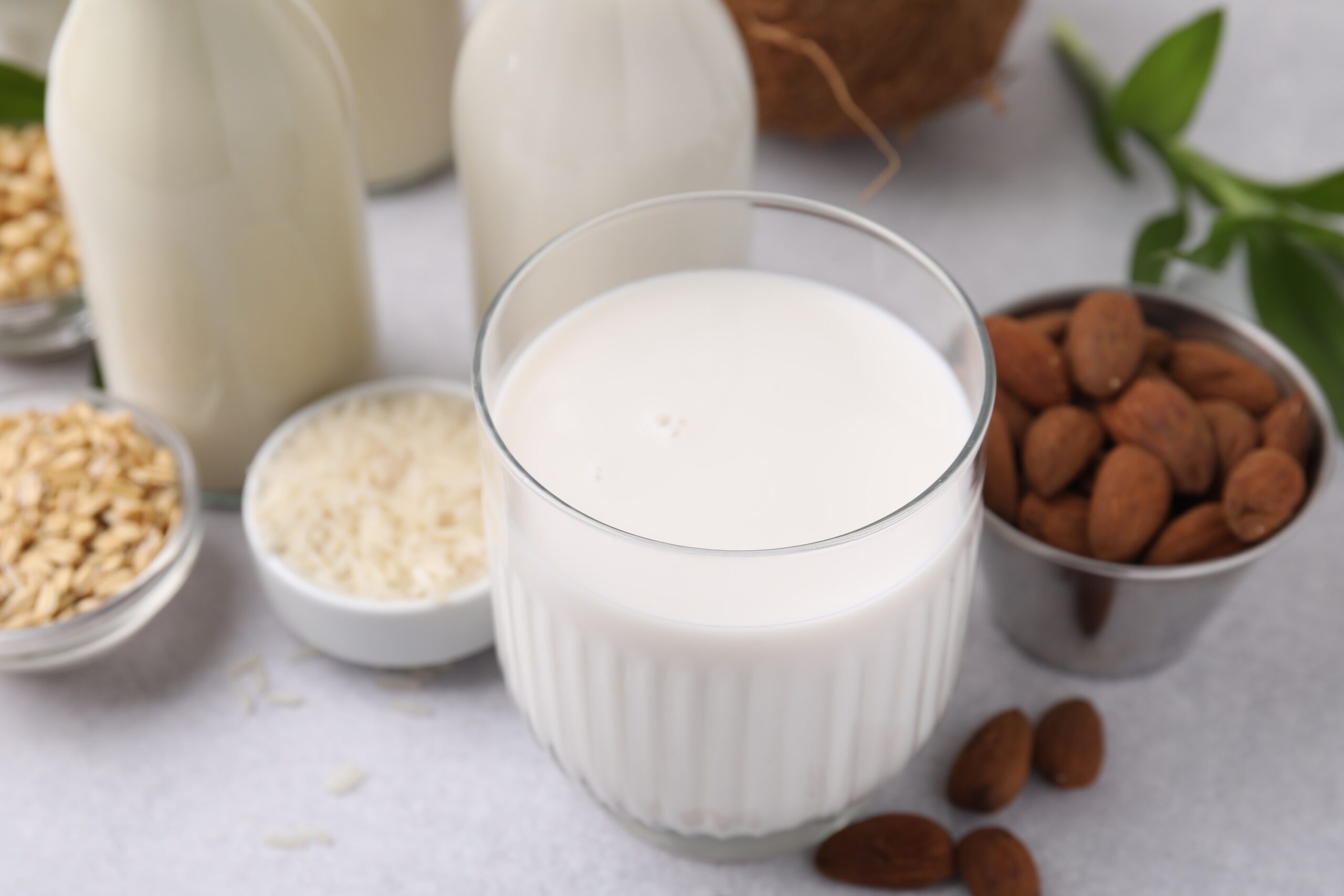
Walk into any coffee shop or grocery store, and you’ll find oat milk and almond milk front and center—and for good reason. Both have earned their place as go-to dairy alternatives, showing up in lattes, smoothies, cereals, and baking recipes across the country. But despite being shelved side by side, they’re nutritionally quite different. One is creamier and higher in fiber; the other is lighter and lower in calories. And depending on your health goals, that difference actually matters.
This guide breaks down everything you need to know to choose between oat milk and almond milk—from calories, carbs, and protein to heart health, blood sugar, and digestion. Whether you’re managing your weight, navigating a food allergy, or just trying to figure out which one belongs in your morning coffee, here’s what the nutrition actually tells us.
Oat milk vs. almond milk: What are the differences?
Both start with the same basic idea—blend a plant ingredient with water, strain out the solids, and you’ve got a dairy alternative. But the similarities mostly end there.
Oat milk is made by blending rolled oats with water and straining out the solids. The result is naturally creamy and slightly sweet, and it holds onto some of the original grain’s fiber and carbs. It was developed in Sweden in the early 1990s by researcher Rickard Öste as a sustainable dairy alternative—and it shows in the kitchen. Oat milk froths well, adds body to hot drinks, and works beautifully in baking. Its beta-glucans—a type of soluble fiber—may also help support heart health by lowering cholesterol levels.
Almond milk follows a similar process—almonds blended with water, then strained—but lands in a very different place nutritionally. It’s lighter, with a subtle nutty flavor, and typically contains just 30 to 40 calories per cup (unsweetened). Most commercial versions are fortified with calcium, vitamin D, and vitamin B12 to bring them closer to dairy. Almond milk has deeper roots than oat milk: it traces back to medieval and Middle Eastern cooking, long before plant-based eating had a brand identity.

The Easy Way
to lose weight and get healthy.
How they actually work in your day
This is where the choice gets practical.
- Coffee: Oat milk wins on texture—it froths better and feels closer to whole milk.
- Smoothies: Almond milk keeps calories lower without competing with other flavors.
- Everyday use: Creaminess and a little more staying power (oat) versus lighter calorie load (almond).
If you’re using either one daily, that difference adds up—especially if weight loss is a goal.
Oat milk vs. almond milk: Nutrition comparison
The numbers on those labels can vary more than you’d expect. FDA guidance on plant-based milks notes that nutrient content differs widely by brand, and fortification plays a big role in what you’re actually getting. Serving sizes and added nutrient levels aren’t standardized—the oat milk you grab off one shelf might have very different calcium levels than the one next to it, and the same goes for almond milk.
As a general rule, many fortified versions provide around a third of your daily calcium needs—but unfortified options can fall well short. Oat milk typically runs higher in calories and carbs; almond milk tends to be lower in both.
The charts below use unsweetened, fortified versions of each. Sweetened varieties will add calories and sugar; unfortified versions may be lower in calcium and vitamin D.
Oat milk vs. almond milk: The basics – calories, carbs, and protein
Oat milk runs higher in carbs and fiber; almond milk is significantly lower in calories and carbs. Neither is a strong protein source—cow’s milk has about 8 grams per cup by comparison. Numbers vary by brand, so your carton’s label is the final word.
| Per 8 ounces (1 cup) | Oat milk | Almond milk |
|---|---|---|
| Calories | 80-100 | 30-40 |
| Carbs (g) | 16 | 1.5 |
| Fiber (g) | 2 | 1 |
| Protein (g) | 3 | 1 |
| Fat (g) | 1.5 | 2.6 |
Where fortification matters: Vitamins and minerals
Most commercial versions of oat and almond milk are fortified to roughly match dairy milk for calcium, vitamin D, and B12. The standout difference: almond milk is naturally much higher in vitamin E, while oat milk contains beta-glucans and avenanthramides—oat-specific compounds that research suggests may offer additional heart-protective benefits.
Oat milk vs. almond milk: % RDA per 1 cup (varies by brand)
| Nutrient | Oat milk | Almond milk |
|---|---|---|
| Calcium | 25–35% | 30–45% |
| Vitamin D | 15–25% | 15–25% |
| Vitamin E | 2–4% | 20–40% |
| Magnesium | 4–8% | 4–6% |
| Vitamin B12 | 25–50% | 25–50% |
Health benefits: Oat milk vs. almond milk
Choosing between oat milk and almond milk isn’t just a matter of taste—the two have meaningfully different nutritional profiles that can support different health goals. Oat milk’s fiber gives it an edge for satiety and heart health, while almond milk’s lower calorie load and minimal carbs make it a strong option for blood sugar management and weight loss.
Neither is a clear winner across the board, but understanding where each one shines can help you make a choice that actually works for your routine.
Noom’s Most Powerful Program
A dual-pathway GLP-1 and behavior change for lasting results.
Digestion and satiety
Oat milk contains beta-glucans, a soluble fiber that slows digestion and may trigger fullness hormones—meaning it can help you feel satisfied longer and reduce how much you eat at your next meal.
Research on beta-glucans broadly—not oat milk specifically—also suggests they act as prebiotics that feed beneficial gut bacteria, which may support overall digestive health.
Almond milk is naturally lactose-free and easy on the stomach—a good pick if you have sensitive digestion. But it contains almost no fiber, so it won’t keep you full on its own. It works best when paired with fiber-rich foods.
Weight management
Unsweetened almond milk has the calorie edge at 30 to 40 calories per cup, but oat milk’s fiber and creaminess may curb snacking later, which matters if you’re tracking calories across the whole day.
Research on energy density broadly shows that lower-calorie foods support greater satiety, helping you eat less overall without feeling deprived—a principle that applies to both of these milks.
- Almond milk fits more easily into lower-calorie eating plans at about 30 to 40 calories per cup vs. oat milk’s 80 to 100.
- Oat milk’s fiber and creaminess may reduce the urge to snack later, which can offset the calorie difference for some people.
- Either way, go unsweetened—added sugars are where calories add up fast.
Heart health
Both milks are low in saturated fat and cholesterol-free, but they support heart health in different ways. Oat milk’s beta-glucans have been associated with lower cholesterol, while almond milk brings antioxidant and fat-quality benefits. Depending on your cardiovascular goals, either one can be a meaningful addition to your diet.
- Oat milk: Beta-glucans may lower LDL cholesterol by 5 to 7% with regular consumption—a benefit the FDA recognizes for heart disease risk reduction. Amounts vary by brand and processing method.
- Almond milk: Provides vitamin E and heart-healthy monounsaturated fats. Research on almond consumption—rather than almond milk specifically—shows that almond-derived vitamin E helps prevent LDL oxidation, a key driver of atherosclerosis, though the same nutrients are present in the milk.
Blood sugar
If blood sugar management is a priority, the difference between these two milks is significant—and it comes down to carbs.
Oat milk has a glycemic index of around 69, meaning its higher carb content can raise blood sugar more quickly after drinking it.
Almond milk lands around 25, with less than 2 grams of carbs per cup, so it barely affects blood sugar levels. For most people managing blood sugar, that gap matters.
- Watching blood sugar? Unsweetened almond milk is the steadier choice.
- Prefer oat milk? Pairing it with protein or healthy fat can help—research on macronutrient combinations shows this approach slows gastric emptying and blunts the glucose response, even if oat milk hasn’t been studied in isolation this way.
Are oat milk and almond milk ultra-processed?
Most store-bought oat and almond milks are considered ultra-processed under the NOVA system—a framework nutrition scientists use to categorize foods by how much they’ve been altered from their whole form.
Research analyzing branded plant-based milks found that 95% of almond milks and most oat milk products contain additives like gums, stabilizers, and added nutrients that put them in that category. That doesn’t make them automatically unhealthy—those additives are what give plant milks their smooth texture and fortified calcium and vitamin D. But it’s worth knowing what you’re getting.
If you want fewer ingredients, homemade oat or almond milk is straightforward—just the base ingredient and water. The trade-off is that you’ll miss out on the fortified vitamins and minerals found in commercial versions. For store-bought, shorter ingredient lists and unsweetened varieties are generally your best guide.
Oat milk vs. almond milk: Taste, texture, and best uses
The best milk is the one you’ll actually use. And oat milk and almond milk are different enough in taste and texture that knowing where each one shines can save you from a lot of mediocre lattes and flat smoothies.
Research shows that texture is one of the biggest factors in which plant-based milk people actually stick with, so it’s worth knowing what each one does well before committing to a carton.
Oat milk: Best uses
Oat milk is naturally creamy and slightly sweet, which is why it’s become a top choice for coffee drinks—it froths beautifully for lattes and cappuccinos and holds up well to heat in a way almond milk doesn’t. That same creaminess makes it a reliable stand-in for dairy in recipes where texture is important. Its neutral, smooth consistency means it blends into both sweet and savory dishes without competing with other flavors.
- Coffee drinks: Froths well for lattes and cappuccinos—the closest plant-based option to whole milk in terms of foam and body.
- Baking: Works well in muffins, pancakes, and quick breads where you need moisture and a little natural sweetness.
- Soups and sauces: Adds a velvety texture to cream-based soups and pasta sauces without the heaviness of dairy.
- Hot cereals: A natural pairing for oatmeal, chia pudding, and overnight oats—the grain flavor complements rather than competes.
- Smoothies: Adds smooth consistency to protein smoothies and breakfast blends without masking other flavors.
Almond milk: best uses
Almond milk is lighter and thinner with a subtle nutty flavor that works best in cold applications and recipes where you want liquid without adding much weight or flavor. It won’t froth the way oat milk does—unless you opt for a barista blend specifically formulated for hot drinks. Its lower calorie count and mild taste make it a go-to for everyday use where you want a clean, neutral base.
- Smoothies: Blends seamlessly into green smoothies and fruit blends without adding calories or overpowering other flavors.
- Cereal and granola: A light, refreshing pour that lets the other ingredients shine.
- Chia pudding and overnight oats: Works well for make-ahead meals where you want a neutral base that absorbs flavors overnight.
- Baking: A solid dairy substitute in recipes that call for regular milk, especially where a lighter crumb is preferred.
- Coffee: Stick to barista blends to prevent separation—regular almond milk tends to curdle in hot drinks.
The short version: reach for oat milk when you want richness and body, almond milk when you want something lighter. Most people find a use for both once they know where each one actually delivers.
Oat milk vs. almond milk: Potential side effects and safety considerations
Both oat milk and almond milk are generally well-tolerated, but neither is completely without caveats. Knowing the potential downsides ahead of time—whether that’s a digestive sensitivity, an allergy concern, or a label worth reading more carefully—helps you make a choice that actually works for your body.
Digestive discomfort
For most people, both milks are easy to incorporate without any issues—but if you have a sensitive stomach or aren’t used to higher-fiber foods, oat milk in particular is worth easing into. Almond milk tends to be the gentler option overall, though it’s not without its own considerations.
Oat milk’s beta-glucans are mostly a good thing, but for some people the soluble fiber can cause gas or bloating—especially in larger amounts or if you’re not used to high-fiber foods. Fermentable fibers like those in oats are known to produce these symptoms in sensitive people, and oat milk becomes high in fermentable compounds at servings larger than about one cup.
Access GLP-1 Weight Loss with Noom
Explore a wide range of prescription medications supported by Noom’s program.
Microdose GLP-1rx
Noom GLP-1rx
Noom GLP-1rx Plus
Wegovy®
Ozempic®

Metformin
Zepbound®
Mounjaro®
Liraglutide
Almond milk is generally easier on the stomach—low in fiber and naturally lactose-free. A few things to keep in mind for both:
- Start with smaller servings if oat milk is new to you and build up gradually
- Choose unsweetened versions without added gums or stabilizers—these tend to be easier to digest
- If you have IBS or gut sensitivity, oat milk in larger amounts may be a trigger worth watching
Allergy and safety considerations
The allergy profiles of these two milks are quite different, so this is worth knowing before you make a swap:
- Almond milk contains tree nuts and is off-limits for anyone with a tree nut allergy—oat milk is the straightforward alternative in those cases.
- Oat milk may contain trace gluten from cross-contamination during processing—if you have celiac disease or gluten sensitivity, look for certified gluten-free oat milk specifically.
- Some people experience discomfort from nut proteins in almond milk even without a diagnosed allergy—if that’s you, oat milk is worth trying instead.
If you’re introducing either milk for the first time, start small and pay attention to how your body responds. Food allergy reactions can range from mild digestive upset to more serious symptoms. When in doubt, check with your doctor—especially if you have known allergies or existing digestive conditions.
Oat milk vs. almond milk: Cost and availability
Both milks are widely available in most grocery stores, but there are some real differences in price and shelf presence worth knowing. Research using 2017–2019 data found similar pricing between the two—almond milk averaging $3.18 per carton and oat milk at $3.17. But more recent data suggest oat milk has crept up in price as demand and production costs have grown. Almond milk still tends to have more shelf space and brand variety, simply because it’s been on the market longer.
A few ways to keep costs manageable:
- Store brands and sale cycles can close the price gap significantly—both milks have solid private-label options now.
- If you use either milk daily, making it at home is straightforward and cheaper, though you’ll give up the fortified vitamins and minerals found in commercial versions.
- Shelf-stable cartons are often cheaper per unit than refrigerated versions and last longer unopened.
🏆 Oat milk vs. almond milk: Which is best for you?
There’s no single winner here—both can fit into a healthy routine depending on what matters most to you.
| Your priority | Better choice | Why |
|---|---|---|
| Weight loss | Almond milk | Fewer calories and carbs per cup |
| Satiety and fullness | Oat milk | Soluble fiber helps you feel satisfied longer |
| Blood sugar management | Almond milk | Very low in carbs, minimal impact on blood sugar |
| Coffee and hot drinks | Oat milk | Froths better, creamier texture, holds up to heat |
| Lighter drinks and smoothies | Almond milk | Neutral flavor, won’t overpower other ingredients |
| Overall nutrition | Either | Both work well when fortified and unsweetened |
The best choice is the one you’ll actually use—and there’s no rule that says you have to pick just one. Many people keep both on hand and reach for whichever fits what they’re making.
FAQs about oat milk vs. almond milk
Is oat milk healthier than almond milk?
Neither is universally “healthier”—it depends on your goals. Oat milk provides more fiber and may support heart health, while almond milk is lower in calories and carbs. Both can fit into a healthy eating pattern when you choose unsweetened versions.
Which milk is best for weight loss?
Both are solid choices for people on lower-calorie plans. Unsweetened almond milk is lower in calories, around 30 to 50 per cup, compared to oat milk’s 80 to 100 calories. But oat milk’s fiber might help you feel fuller longer, which could support your goals too.
Does oat milk spike blood sugar?
Oat milk can raise blood sugar more than almond milk because it contains more carbohydrates. Research shows oat-based drinks often cause glycemic responses similar to eating a slice of bread, while almond milk has minimal impact. If you’re managing blood sugar, unsweetened almond milk is usually the gentler choice.
Is almond milk nutritious?
Plain almond milk is naturally low in most nutrients, but many brands fortify it with calcium, vitamin D, and B12. Check the nutrition facts on your specific brand’s label. While it won’t provide much protein or natural vitamins, fortified versions can contribute meaningful nutrients to your daily intake.
Which is better for coffee?
Oat milk tends to work better in coffee because it’s naturally creamier and more stable when heated and frothed. Almond milk can work, but it’s more prone to separating or looking slightly curdled in very hot or acidic coffee—especially if it’s not a special “barista” version.
Are almond milk and oat milk safe for kids and older adults?
Both can work well when fortified with calcium and vitamin D—but neither is a straightforward nutritional swap for cow’s milk. The biggest gap is protein: cow’s milk provides about 8 grams per cup, compared to oat milk’s 3 grams and almond milk’s 1 gram. For kids supporting growth and older adults maintaining muscle mass, that difference matters if milk is a regular part of their diet.
On the allergy side, almond milk isn’t appropriate for children with tree nut allergies—oat milk is the safer swap in those cases, just make sure it’s certified gluten-free if there’s any sensitivity there. For children under two, neither milk should replace breast milk or formula without guidance from a pediatrician.
Noom’s Most Powerful Program
A dual-pathway GLP-1 and behavior change for lasting results.
The bottom line: Choose the milk that works best for you
Oat milk and almond milk are both solid choices—they just work better in different situations. If satiety, heart health, or a creamy texture in your coffee are priorities, oat milk has the edge. If you’re focused on keeping calories low, managing blood sugar, or want something gentler on digestion, almond milk is the more straightforward pick. Neither one is a nutritional powerhouse on its own, but as part of a balanced diet, both can contribute meaningfully—especially when you go unsweetened and check labels for fortification.
The honest answer is that most people don’t need to choose just one. Oat milk in your latte, almond milk in your smoothie—there’s no rule against keeping both in the fridge. What matters most is that the milk you reach for actually fits your goals, tastes good to you, and doesn’t come loaded with added sugars. Start there, and you’ll be in good shape either way.
If you’re looking for more healthy habit strategies, explore the Noom app on iOS & Android. Noom focuses on building awareness around your habits and food choices. When you understand how different foods affect your hunger, satisfaction, and habits, you can make choices that feel balanced—and build changes that last.
Editorial standards
At Noom, we’re committed to providing health information that’s grounded in reliable science and expert review. Our content is created with the support of qualified professionals and based on well-established research from trusted medical and scientific organizations. Learn more about the experts behind our content on our Health Expert Team page.