What you’ll learn:
- Turmeric shots are marketed as a quick way to get a concentrated dose of turmeric.
- While curcumin—the active compound—has some evidence behind it, the amount in turmeric shots is relatively small.
- Turmeric shots aren’t a shortcut to weight loss or longevity, especially without diet and lifestyle changes.
Turmeric’s rise in the wellness world might feel recent, but its roots go back thousands of years.
This bright yellow spice has been used for over 4,000 years in traditional Ayurvedic medicine, a holistic system from India that emphasizes balance between body, mind, and lifestyle. In that context, turmeric wasn’t a trend—it was part of everyday health practices, used in cooking as well as for its perceived healing properties.
Only recently has turmeric been repackaged for modern wellness culture. What was once a staple in Indian kitchens has been rebranded as “golden milk,” turned into lattes, and now concentrated into small “shots” across juice bars and even in your own kitchen.
These potent drinks are called “turmeric shots,” and they promise to fight inflammation, boost metabolism, and even help with fat loss in a small package.
They land squarely in two booming categories: functional beverages and “natural” remedies. Instead of soda or sugary coffee drinks, people are reaching for small bottles that claim to support immunity, gut health, or metabolism. And instead of synthetic-sounding ingredients, there’s something reassuring about a familiar kitchen spice doing the work.
New from Noom
Microdose GLP-1Rx Plus
An affordable way to start your GLP-1 journey with Compounded Tirzepatide.

*Initial 3 week subscription and 4 weeks of medication from $79 plus tax and $199 per month plus tax for 12 week subscription thereafter. Final pricing depends on program selection. Noom GLP-1Rx Plus Microdose Program involves medication (when appropriate), healthy diet, exercise and support. Individual results vary. Meds & personalization based on need as determined by a third-party clinician. Medications are not reviewed by FDA for safety, efficacy, or quality. No affiliation with Eli Lilly and Company, the only US source of FDA-approved tirzepatide. Not available in all 50 US states.
It’s an appealing idea: a quick, concentrated dose of a plant with real scientific research behind it.
Like most wellness trends, things get more nuanced when you look at the science. Most of the impressive research on turmeric actually focuses on curcumin—one of its active compounds—often in concentrated supplement form and at higher doses. So do turmeric shots live up to the same claims as the active ingredient?
Let’s dive into what turmeric shots can realistically do, whether the science supports the trend, and how you can add them into your routine. Maggie Hudspeth, Noom Registered Dietitian Nutritionist, will share her expert opinion on turmeric and curcumin.
What are turmeric shots?
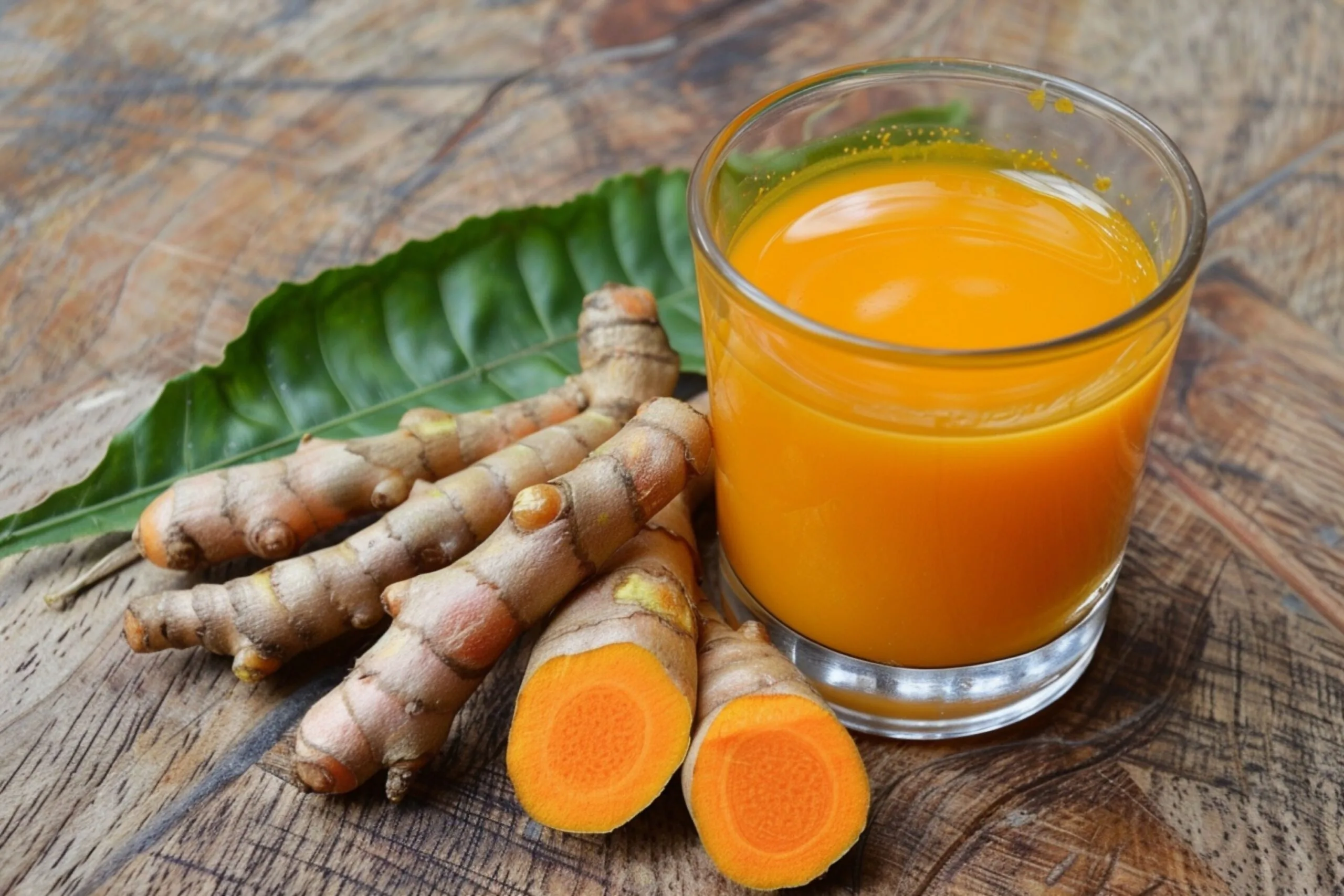
A turmeric shot is a small (usually 1- to 3-ounce) concentrated drink meant to be taken in one quick gulp.
In the world of functional beverages, the word “shot” signals intensity. Instead of slowly sipping as you would a juice or smoothie, you take a concentrated blend marketed for inflammation, immunity, digestion, or metabolism support. The idea is that a small volume packs in strong flavor and a quick health boost.
Most turmeric shots include:
- Fresh turmeric root or turmeric powder
- Ginger
- Lemon or orange juice
- Black pepper
- Optional extras like honey, cayenne, or apple cider vinegar
You’ll see them bottled at grocery stores, sold cold-pressed at juice bars, or you can make them at home.
Turmeric vs. curcumin: What’s the difference?
When people talk about turmeric’s benefits, they’re usually talking about curcumin—one of the spice’s main active compounds.
Turmeric is the whole root. Curcumin is just one component inside it, but it’s the compound most often studied for its anti-inflammatory and antioxidant effects.
Here’s where things get interesting: curcumin makes up only a tiny fraction of turmeric by weight, sometimes only 3%. So when you drink a turmeric shot, the actual amount of curcumin you’re getting is relatively small—much lower than the doses typically used in clinical trials.
There’s also the question of absorption. Curcumin has what researchers call low bioavailability, meaning the body doesn’t absorb it very efficiently. It doesn’t dissolve well in water, and it’s rapidly metabolized and eliminated after consumption.
That’s why many recipes include black pepper. Piperine, the compound in black pepper, has been shown to significantly enhance curcumin absorption, according to Frontiers in Pharmacology:
Why are turmeric shots the latest wellness trend?
Turmeric shots didn’t become popular by accident. They sit at the intersection of several big health trends.
- The rise of plant-based wellness: “There’s a growing interest in eating plant-derived foods. People are looking for ‘natural’ options that look and feel good for you,” explains Hudspeth. And that makes sense. Curcumin has been widely studied for its antioxidant and anti-inflammatory properties. That research gives turmeric scientific credibility, even if most studies use concentrated extracts rather than culinary amounts.
- Functional beverages replacing sugary drinks: Turmeric shots are also part of a popular trend of people skipping high-sugar and high-calorie drinks. Over the past decade, many people have moved away from soda and sugar-forward drinks toward drinks marketed for specific benefits, like immunity, gut health, protein, and fiber. A turmeric shot is quick, low in calories, and feels purposeful. “The practical reality here is simple. If a small bottle or 2-ounce shot of turmeric replaces a higher-calorie morning latte or afternoon soda, the benefit may have less to do with turmeric itself and more to do with the swap,” adds Hudspeth.
- Growing interest in longevity: Turmeric shots align with the growing conversation around longevity. The focus of that conversation has shifted in recent years. It’s less about your biological age and more about extending healthspan—the number of years you feel strong, mobile, and metabolically healthy. Reducing chronic inflammation, supporting insulin sensitivity, and minimizing oxidative stress are all part of that equation.
Turmeric shots: Benefits, research, and risks
Turmeric shots are often described as anti-inflammatory, metabolism-boosting, and even fat-burning. The science behind these claims mostly comes from studies on curcumin supplements, not small culinary doses in beverages.
Here’s what research actually shows and how it translates (or doesn’t) to a 2-ounce shot.
Curcumin is anti-inflammatory
Chronic low-grade inflammation is linked to many long-term health conditions, including cardiovascular disease, metabolic syndrome, and insulin resistance. Because of this, researchers have spent decades studying compounds that may help regulate inflammatory pathways.
Oxidative stress occurs when harmful molecules build up in the body faster than the body can neutralize them. Over time, this imbalance can damage cells and trigger inflammatory responses. Research found that curcumin may help reduce this process. The supplement can lower the production of harmful molecules and support the body’s natural antioxidant defenses. Through these antioxidant effects, curcumin may help reduce inflammation.
But most studies use high doses of concentrated curcumin supplements, and even then, absorption is limited. A turmeric shot made with culinary turmeric contains much smaller amounts of curcumin, so its effects are likely much more subtle.
Some studies link curcumin to weight loss
Turmeric is often marketed as a natural fat burner, but research doesn’t show that turmeric itself leads to meaningful weight loss.
Some studies of curcumin supplements—the main active compound in turmeric—have found modest effects. A meta-analysis of randomized trials in people with prediabetes or type 2 diabetes found that participants taking curcumin lost an average of 4 pounds more than those who took a placebo. The same analysis also reported small reductions in waist circumference, although many outcomes showed low-certainty evidence, and the results may not apply to people without metabolic conditions.
Other research has found even smaller effects. A meta-analysis reported an average weight reduction of only about 1 pound with curcumin supplementation. While statistically significant in some trials, the changes in body weight, BMI, and waist circumference were generally small and inconsistent across studies.
Curcumin may have a small effect on body weight when taken consistently in supplement form. But the changes are modest, and the studies use concentrated extracts — not turmeric powder or turmeric shots. There’s also no strong evidence that turmeric shots alone meaningfully increase calorie burn or cause targeted fat loss.
“In many cases, any weight loss is more likely due to what the turmeric shot replaces. If you usually reach for a sweetened latte but switch to a turmeric shot, the swap can reduce overall calorie intake, which may support weight loss over time,” notes Hudspeth.
Curcumin can be helpful for people at risk of type 2 diabetes
Researchers have explored whether curcumin might help support glucose metabolism. In one study, people with prediabetes who took curcumin extract for nine months were significantly less likely to develop type 2 diabetes. In fact, none of the participants taking curcumin developed diabetes, compared with about 16% of those taking a placebo.
Here’s the catch: these studies used concentrated curcumin extracts, often at doses far higher than what you’d get from turmeric in food. A turmeric shot contains much smaller amounts, and only a fraction is absorbed by the body.
Hudspeth explains that “turmeric shots may support a healthy eating pattern, but they’re not a substitute for the behavior changes needed for blood sugar control. Balanced meals with protein and fiber, limiting added sugars, and regular movement are important habits that can’t be replaced by a turmeric shot. If you have type 2 diabetes, it’s important to follow your prescribed treatment plan and work with your healthcare provider before adding supplements or making significant dietary changes.”
Are turmeric shots safe?
As a common spice, turmeric is generally very safe for most people. The safety concerns usually involve high-dose supplements, not culinary use.
It’s rare, but curcumin supplements have been linked to liver issues—usually when taken in high doses or combined with other herbal products.
Curcumin can also interact with several medications. Research published in EPMA Journal discusses how curcumin may influence clotting pathways and potentially increase bleeding risk at higher doses.
For healthy individuals using turmeric at food levels, the risk is low. But when doses rise into supplement territory, medical guidance becomes important. Before starting any supplements or major diet change, it’s always best to check with your doctor.
Access GLP-1 Weight Loss with Noom
Explore a wide range of prescription medications supported by Noom’s program.Microdose GLP-1rx
Noom GLP-1rx
Noom GLP-1rx Plus
Wegovy®
Ozempic®
Metformin
Zepbound®
Mounjaro®
Liraglutide
Are there any side effects of taking turmeric shots?
For most people, turmeric shots don’t cause any issues, but some may experience mild digestive side effects, including nausea, acid reflux, stomach upset, diarrhea, or constipation. Starting with a small amount and gradually increasing your intake may help reduce the chance of discomfort. As always, listen to your body and stop if things aren’t feeling right.
Tips for making and buying turmeric shots
Turmeric shots are widely available at grocery stores and juice bars, but they’re also simple to make at home with a few basic ingredients. The best option often comes down to what you’ll actually stick with — some people might not want to break out the blender or search the produce aisle.
How to make turmeric shots
Turmeric shots are typically made by blending fresh turmeric root (or turmeric powder) with ingredients like ginger, lemon juice, black pepper, and a small amount of water. The mixture is then blended or juiced and taken in a 1–3 ounce serving.
Black pepper is often included because it may help improve curcumin absorption.
You don’t need special equipment — a basic blender works well. If you prefer a smoother texture, you can strain the mixture using a fine mesh strainer or cheesecloth, but it’s optional.
Here are a few tips to get started:
- Start with small amounts of turmeric — the flavor can be strong and slightly bitter
- Add a little honey or orange juice if you want to balance the taste
- Store in the refrigerator and use within 2–3 days for freshness
- Wear gloves when handling fresh turmeric, as it can stain
Making them at home can be more cost-effective, but it does take a bit of prep.
Where to buy turmeric shots
You can find turmeric shots at many grocery stores, juice bars, and wellness brands. Popular options include Suja, Evolution Fresh, Pressed Juicery, and even Trader Joe’s.
When choosing a turmeric shot, look for:
- Simple ingredient lists (turmeric, ginger, citrus)
- Black pepper to help with curcumin absorption and bioavailability
- Little to no added sugar
More questions about turmeric shots
What are turmeric shots good for?
Turmeric shots are often used for their antioxidant and anti-inflammatory compounds, particularly curcumin. Some research suggests curcumin may support metabolic health and help regulate inflammatory pathways. But turmeric shots contain much smaller amounts than supplements, so their effects are likely mild.
How often should I drink a turmeric shot?
There’s no standard recommendation, but most people who include turmeric shots in their routine have them once daily or a few times per week. People who take supplements typically take them once per day.
Is it better to drink turmeric at night or in the morning?
Some people prefer taking turmeric shots in the morning as part of a routine, while others take them with meals to reduce the chance of stomach discomfort. The best time is the one that fits easily into your day. They can be used as a morning refresher or an afternoon energy boost, but the routine doesn’t need to follow a specific schedule.
What do turmeric shots do?
Turmeric shots provide small amounts of curcumin and other plant compounds with antioxidant properties. They may contribute to an anti-inflammatory eating pattern and can be a low-calorie alternative to sugary beverages. But they work best as part of a balanced diet and healthy lifestyle.
Can you take turmeric instead of blood thinners?
No. Turmeric should not be used as a replacement for prescribed blood thinners. While curcumin may have mild blood-thinning effects, the evidence is limited, and the doses in food or turmeric shots aren’t reliable enough to prevent blood clots. If you take anticoagulant medications, talk to your healthcare provider before using turmeric supplements, since high doses may increase bleeding risk.
The bottom line: The small benefits of turmeric shots come from curcumin, not turmeric
Curcumin has well-documented biological effects when taken in concentrated supplement form.
The problem is that turmeric shots contain much smaller amounts of curcumin, and absorption is limited without specialized formulations. That means their impact is likely subtle rather than dramatic.
If you enjoy turmeric shots, they can absolutely fit into a healthy lifestyle. They may contribute antioxidants and support an overall anti-inflammatory eating pattern. And if they replace higher-calorie beverages, that simple swap alone can support weight management over time.
But sustainable fat loss and long-term metabolic health are built on consistent habits — balanced nutrition, strength training, regular movement, adequate sleep, and stress management. No single ingredient, no matter how trendy, replaces that foundation.
If you’re curious about how your habits are affecting your metabolic health, inflammation markers, or blood sugar levels, tools like the Noom Proactive Health program can provide personalized insight. This easy, at-home blood test offers clear, actionable feedback on what’s working in your routine — and where you may want to focus next.
Editorial standards
At Noom, we’re committed to providing health information that’s grounded in reliable science and expert review. Our content is created with the support of qualified professionals and based on well-established research from trusted medical and scientific organizations. Learn more about the experts behind our content on our Health Expert Team page.