What you’ll learn:
- The bone broth diet may lead to quick weight changes at first, but a lot of that early shift is usually water weight from eating far fewer calories.
- Research on the bone broth diet for weight loss is limited, and more long-term studies are needed before it can be considered a well-established approach.
- Lasting progress tends to come from balanced habits you can stick with, rather than short-term cleanses or highly restrictive routines.
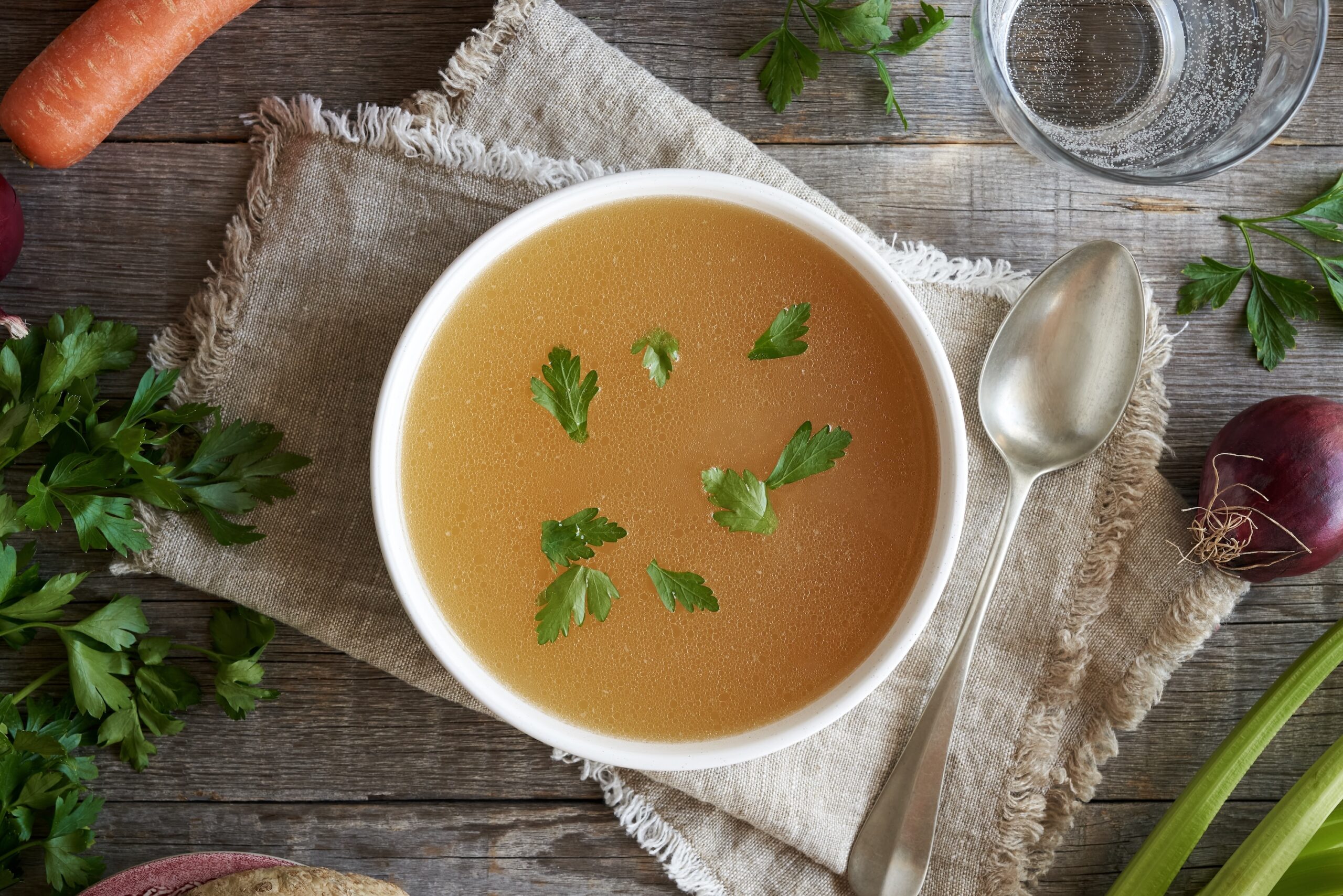
If you’ve spent any time on wellness social media lately, you’ve probably seen people talking about the bone broth diet. It’s often framed as a “gut healing” approach to weight loss that focuses on drinking bone broth combined with alternating intermittent fasting and whole food eating.
The most common version is structured as a 21-day plan, where people eat mostly whole foods on some days and lean mostly on bone broth on others.
Beyond celebrity mentions, its popularity has grown because it seems easy to follow, and warm broth is often seen as a comforting, filling option throughout the day. If you aren’t familiar with it, bone broth is made by simmering animal bones for many hours, which releases protein, collagen, and small amounts of minerals into the liquid.
Let’s take a closer look at what this diet involves, what science can actually support, and what to consider before trying it, including safety, effectiveness, and whether it’s sustainable over time.
What is the bone broth diet?
You’ll probably notice something right away if you’re looking up how to do a bone broth diet: people describe it in lots of different ways. There’s no single clinical version of the bone broth diet, but a version of it has been tested in a clinical setting. Here are the most common ways people do the bone broth diet.
Noom’s Most Powerful Program
A dual-pathway GLP-1 and behavior change for lasting results.
Alternating “broth days” (5:2 style)
This version follows a 5:2 intermittent fasting pattern. This means you eat normally five days per week, and on two days, you limit intake to mostly bone broth and very low-calorie foods.
Does it work? Research suggests that intermittent fasting patterns — including 5:2-style approaches—may support weight loss and offer some metabolic benefits. But those effects are likely driven by overall calorie reduction—not by bone broth specifically.
Modified bone broth plan
This approach includes bone broth daily along with small, portion-controlled meals built around foods like eggs, fish, poultry, and non-starchy vegetables. It often still uses a 5:2 structure, but broth becomes part of the entire eating pattern rather than just fasting days.
Does it work? In an 8-week study, some of the participants experienced meaningful reductions in weight and improvements in body composition. That said, the plan also included calorie control and fasting days, so it’s hard to attribute the results to broth alone. The structure—not just the broth—likely played a major role.
Bone broth as a daily add-on
For this less-extreme plan, you would add 1 or 2 cups of bone broth per day to an otherwise balanced eating pattern. There’s no required fasting.
Does it work? There’s no clinical trial evidence showing that adding bone broth by itself leads to weight loss. If someone sees results, they’re likely coming from overall calorie changes or improved eating structure—not from broth.
3- to 7-day bone broth fast
This is the most restrictive version. For several days, you consume mostly bone broth with little to no solid food. It’s often framed as a quick metabolic “reset” and involves continuous calorie restriction.
Does it work? Weight loss may happen in the short term because this functions like a very-low-calorie diet. But there’s no strong evidence that broth-only fasts offer unique metabolic or gut benefits beyond temporary calorie restriction. In other words, the results come from eating much less, not from a special property of bone broth. Any weight loss is likely mostly water weight and will come back with regular eating.
What is bone broth—and why is it central to this diet?
Bone broth is the centerpiece of the bone broth diet, so it’s worth breaking down what it really is. Bone broth is made by slowly simmering animal bones and connective tissue in water for 12 to 24 hours, sometimes with vegetables and herbs. That long cooking time helps protein, collagen, and small amounts of minerals to release from the bones into the broth. This extra time helps collagen turn into gelatin, which creates that thicker, almost silky texture.
Bone broth typically contains:

The Easy Way
to lose weight and get healthy.
- Protein: Most bone broths provide about 6 to 12 grams of protein per cup, depending on how concentrated they are.
- Collagen and gelatin: Collagen from bones and connective tissue breaks down into gelatin during long cooking, which gives it a silky texture.
- Amino acids linked to gut health: Bone broth contains amino acids like glycine, proline, glutamine, and arginine, which researchers discuss for their potential roles in gut barrier function and inflammation regulation. The key caveat: amounts vary widely by recipe and preparation
- Small amounts of minerals: Despite common claims, bone broth isn’t a meaningful source of most minerals. Calcium, magnesium, iron, and copper levels are generally very low, while potassium is the one mineral that shows up more consistently, especially in some fish broths
- Often high in sodium: Sodium can add up quickly—especially in store-bought broths—and varies a lot by brand and preparation
Bone broth is warm, savory, easy to sip, and relatively low in calories, which can make modified fasting days feel more manageable. But it’s not a full meal.
Bone broth doesn’t provide enough calories, fiber, essential fats, or micronutrients to replace balanced meals, and the research is clear that it works best as a supporting food—not a nutritional stand-in.
Why the bone broth diet appeals to people
Structured diets like the bone broth diet often feel appealing because they offer a clear plan in a world where food choices can feel endless. When the rules are spelled out for you, there’s less mental back-and-forth about what to eat or when to eat it.
Plus, making what appear to be healthier eating choices can be connected with positive emotions like feeling more in control or focused. In a study of people with metabolic syndrome, people often described healthier eating routines as connected with feelings like more energy, determination, and a sense of accomplishment.
People are often drawn to structured diets because they offer:
- Clear boundaries around meals
- A predictable schedule
- A focused goal over a short period of time
That appeal makes sense, but it’s also worth thinking about what happens after the structure ends. This is where questions about long-term sustainability start to matter, which we’ll explore next.
Can the bone broth diet really help you lose weight?
There isn’t strong evidence that a bone broth diet has unique effects beyond simple calorie restriction.
So far, only one structured version of the diet has been tested directly. In an 8-week study, 100 adults with BMIs over 30 followed a 5:2-style intermittent fasting plan. That meant eating normally five days per week and limiting intake on two nonconsecutive days, with bone broth used as part of the lower-calorie structure.
On regular eating days, meals focused on lean protein, vegetables, and portion control. Over the 8 weeks, participants lost an average of about 15 pounds.
Researchers also saw reductions in waist circumference and improvements in fasting blood sugar. But the authors were clear: longer, randomized trials are still needed to confirm the findings and determine whether the results hold up over time.
It’s important to look at the full context of the study. The program lasted eight weeks and followed a structured 5:2 intermittent fasting framework with very low-calorie days, portion-controlled meals, and regular guidance. And there were side effects, like diarrhea, reported. In other words, this wasn’t simply “add broth and lose weight”—it was a carefully designed calorie-controlled program, and longer-term results still need to be studied.
Beyond that one study, most of what we know comes from research on pieces of the approach—like intermittent fasting and calorie reduction—rather than the full bone broth plan itself. Here’s what the broader research suggests:
Bone broth is generally a healthy food with a decent amount of protein
Bone broth has about 8 to 10 grams of protein per cup, and higher protein diets are sometimes associated with weight loss. One study showed that a higher-protein, calorie-reduced diet can help with weight loss and metabolic health, as long as the overall pattern is:
- Lower total calories
- Higher proportion of calories from protein
- Balanced carbs and fats with plenty of fiber
Getting enough protein at meals can also help protect muscle while losing weight and support better glucose control, especially when paired with a calorie deficit and other healthy habits.
Variations of the bone broth diet are typically low-carb
Reviews often find that lower-carb approaches can lead to similar, or sometimes slightly greater, weight loss in the short term compared with low-fat plans. The harder part is that many people find these patterns difficult to stick with over time.
Variations of the bone broth diet are similar to intermittent fasting plans
Research suggests intermittent fasting can support weight loss and metabolic health, with outcomes often comparable to continuous calorie reduction over time.
Many variations are very-low-calorie diets
Studies show that very-low-calorie diets can produce quick weight loss when done under medical supervision, but keeping that weight off tends to be challenging, and long-term success usually depends on ongoing support and sustainable habits.
So while parts of the bone broth diet overlap with approaches that have been studied, the diet itself still needs stronger long-term evidence before it can be considered a well-established weight loss strategy.
Why weight loss can happen quickly (and what it usually means)
Quick results can feel dramatic at first, but don’t always tell the full story. Short-term weight loss is common on very restrictive plans, including broth-based diets, because daily calorie intake often becomes much lower than usual. That alone can lead to a rapid drop in weight early on.
In many cases, that early change is largely water weight, not body fat. Lower-carb or very low-calorie plans can cause the body to use up stored carbohydrate (called glycogen), and glycogen holds onto water. As those stores shrink, water leaves with them, which can show up as a quick loss on the scale.
Access GLP-1 Weight Loss with Noom
Explore a wide range of prescription medications supported by Noom’s program.
Microdose GLP-1rx
Noom GLP-1rx
Noom GLP-1rx Plus
Wegovy®
Ozempic®

Metformin
Zepbound®
Mounjaro®
Liraglutide
Common misconceptions about the bone broth diet
A lot of wellness trends, like the bone broth diet, come with catchy messaging, especially on social media and in ads. Some of these phrases sound science-backed on the surface, but they can be easy to misunderstand without more context. Here’s what to know:
- “Resting the gut”: The idea is that avoiding food gives digestion time to heal. But your digestive system doesn’t need to shut down to stay healthy, and eating a variety of foods regularly, including fiber, plays a key role in keeping your gut working well.
- “Detoxing” the body: Detox language is everywhere in diet culture, but your liver and kidneys already handle waste removal every day. There’s no clear evidence that a broth-focused diet boosts detox in a meaningful way.
- A “fat-burning switch”: Some plans frame broth fasts as flipping a special fat-burning switch. What’s more likely is that very low calorie intake combined with low carbohydrate intake can push the body toward ketosis, a metabolic state where fat is used more readily for fuel. That said, most early weight changes are still best explained by eating fewer calories and losing stored water, which commonly happens when carbs drop.
Sustainable progress usually comes from eating patterns that provide enough nutrition, keep you satisfied, and fit into real life beyond a short plan.
Is the bone broth diet healthy?
While bone broth can absolutely fit into a balanced eating pattern and it’s overall nutritious, using it as the main source of nutrition is a very different situation. Using bone broth as a small part of a balanced, lower‑calorie plan that includes enough protein, fiber, healthy fats, and a variety of minimally processed foods can be a weight‑loss approach.
But when bone broth becomes the main source of calories, as in only bone broth days, the risk of missing key nutrients, feeling low on energy, losing lean muscle, and overdoing sodium goes up.
Is the bone broth diet safe?
Whether a specific bone broth diet is safe depends on what the plan replaces and how long you follow it. Plans that rely heavily on liquid intake, are light on solid foods, and very low in calories can be dangerous.
Some of the potential risks linked to restrictive or very-low-calorie diets include:
- Low fiber and nutrients: Broth doesn’t provide enough of the vitamins and minerals your body needs daily.
- Muscle loss, which can occur alongside rapid weight changes and with diet plans that don’t provide enough protein.
- Excess sodium, which can be a concern with many store-bought broths.
- May trigger restrictive eating patterns, especially for those with past food-related struggles.
The bone broth diet isn’t a safe choice for:
- Anyone with a past or current eating disorder
- People who are pregnant or breastfeeding
- Those with kidney disease, gout, or salt-sensitive medical conditions
A healthcare professional can help you figure out what’s safe and appropriate for your body before trying a restrictive plan.
Bone broth diet meal plan examples (and more balanced alternatives)
Many bone broth diet plans follow a similar structure online, usually mixing very simple meals with broth-focused days. These examples are meant to help you understand what the trend looks like in practice, not as a recommendation.
A typical 7-day plan might include:
| Day | Type | Meals & snacks |
|---|---|---|
| Day 1 | Whole-food + broth | Breakfast: 2 eggs with sautéed spinach Snack: 1 packet bone broth Lunch: Grilled chicken breast + large salad (mixed greens, cucumber, olive oil) Snack: 1 packet bone broth Dinner: Baked salmon + roasted broccoli + small side of berries |
| Day 2 | Fasting / Broth Day | Throughout the day: 1 packet bone broth about every 2 hours (up to 7 packets total) Optional (if needed): 4 oz lean protein (such as grilled chicken or fish) |
| Day 3 | Whole-food + broth | Breakfast: Greek yogurt (plain, unsweetened) + small handful of berries Snack: 1 packet bone broth Lunch: Turkey lettuce wraps + sliced avocado Snack: 1 packet bone broth Dinner: Grilled shrimp + zucchini + olive oil drizzle |
| Day 4 | Whole-food + broth | Breakfast: Scrambled eggs + mushrooms Snack: 1 packet bone broth Lunch: Salmon salad (mixed greens, olive oil, lemon) Snack: 1 packet bone broth Dinner: Chicken thigh + roasted cauliflower |
| Day 5 | Whole-food + broth | Breakfast: Omelet with peppers and onions Snack: 1 packet bone broth Lunch: Grilled tofu or chicken + large vegetable bowl Snack: 1 packet bone broth Dinner: Baked cod + asparagus + small serving of fruit |
| Day 6 | Fasting / Broth Day | Throughout the day: 1 packet bone broth every 2 hours (up to 7 packets total) Optional: 4 oz lean protein |
| Day 7 | Whole-food + broth | Breakfast: 2 eggs + sautéed kale Snack: 1 packet bone broth Lunch: Chicken + mixed greens + olive oil Snack: 1 packet bone broth Dinner: Grilled salmon + Brussels sprouts |
In the study this chart is based on, one packet of bone broth was mixed with about 8 to 12 ounces of hot water.
For practical use, you can think of:
- 1 packet = 1 mug of broth (roughly 1 to 1½ cups, or 8 to 12 oz)
- Each serving in the study provided about 70 calories and 16 grams of protein when prepared this way.
If you’re using a different brand, you can match it by aiming for around 70 calories and a good amount of protein per “mug” of broth, then use that as your “one packet” serving.
A more flexible approach is to focus on balanced meals that include broth as one part of the picture, alongside foods that support fullness and nutrition.
How to incorporate bone broth into your diet safely
Broth can absolutely fit into everyday eating without becoming the center of a restrictive plan. Think of it as a helpful add-on, especially during colder months or busy weeks.
Simple ways to add it include:
- Making a soup with vegetables and lean protein
- Using it as a warm afternoon drink alongside a sandwich or salad
- Cooking lentils, grains, or veggies in broth for flavor and extra protein
Plant-based alternatives can work well too, such as:
- Rich vegetable broth
- Mushroom-based soups
- Miso broth for a savory option
Rather than focusing on a single trend, most sustainable progress comes from meals that feel satisfying, varied, and realistic over time.
3-day and 7-day bone broth diet plans for weight loss: What to know
Short, broth-based diet plans are usually designed around speed. A 3-day or 7-day schedule can sound appealing for anyone hoping to see quick progress or feel more “on track” with their eating.
In reality, the body responds to these plans mostly through calorie reduction and fluid shifts. As we mentioned earlier, eating very little for several days can lower glycogen, the stored form of carbohydrate your body uses for energy. Since glycogen holds onto water, losing it can make the scale move fast early on.
The bigger concern is what happens afterward. These plans are hard to maintain, don’t provide complete nutrition, and often lead to weight regain once normal meals return.
For most people, a steady approach to weight loss built around balanced, satisfying meals tends to be more supportive than a very short, restrictive plan.
Frequently asked questions about the bone broth diet
The bone broth diet comes with a lot of buzz, and it’s easy to end up with questions about how it works, whether it’s safe, and what the science actually supports. Here are some quick, clear answers to the most common FAQs.
Is the bone broth diet healthy for weight loss?
Bone broth can be part of a balanced diet, but the bone broth diet itself has limited long-term research behind it. Some people lose weight quickly because the plan often cuts calories dramatically. The challenge is that fast results don’t always reflect fat loss, and very restrictive approaches are hard to maintain once normal eating returns.
Is the bone broth diet safe?
Safety depends on how restrictive the plan is. Very low-calorie broth days can leave you short on fiber, vitamins, and enough overall energy, and many store-bought broths are high in sodium. These plans are also hard to sustain and don’t provide complete nutrition.
How long can you do the bone broth diet?
Most plans are marketed as short-term, like 3, 7, or 21 days. Long periods of broth-focused eating aren’t generally recommended because it’s difficult to meet your full nutrition needs with so few calories and such limited food variety. If you’re considering anything beyond a few days, it’s worth checking in with a healthcare provider first.
Can you lose weight on a bone broth diet?
When bone broth is combined with intermittent fasting, a lower-calorie diet, high-protein meals, and light exercise, weight loss is likely. People in the study lost an average of around 17 pounds by the end of the program, and many lost about 5% of their body weight within the first three weeks. They also maintained their weight during short maintenance breaks, and the program was reported to be safe and generally well tolerated.
That said, the diet included more than just bone broth, and the researchers note that longer, controlled studies are needed to confirm how sustainable the results are.
How can I add bone broth to my diet without following the diet?
Add bone broth as a warm drink between meals or before. Or, try it in soups with vegetables and protein, cook grains or lentils in broth, or sip a warm cup alongside a healthy snack.
Does bone broth help with gut health or inflammation?
Bone broth contains amino acids like glycine and proline, and early research suggests these nutrients may support the intestinal barrier in certain contexts. That said, most of the evidence is still preliminary, and broth isn’t a proven treatment for gut conditions. Regular nourishment, including fiber-rich foods, remains one of the most important parts of supporting gut function.
Who should avoid the bone broth diet?
People who are pregnant or breastfeeding, anyone with kidney disease, gout, or salt-sensitive conditions, and those with a past or current eating disorder should avoid this kind of approach. If you’re unsure, a healthcare provider can help you choose something safer and more supportive.
What’s the difference between bone broth and stock?
People often distinguish bone broth from stock by cooking time, but in practice, there’s significant overlap. Both are typically simmered for hours, and some traditional stocks are cooked just as long as what’s now marketed as bone broth.
Noom’s Most Powerful Program
A dual-pathway GLP-1 and behavior change for lasting results.
The bottom line: The bone broth diet can help you lose weight, but it might not be sustainable
The bone broth diet can lead to weight loss—especially when it’s paired with intermittent fasting and overall calorie reduction. In the one structured study we have so far, participants lost a meaningful amount of weight over eight weeks. But that plan included more than just broth: it involved fasting days, portion control, and a clear eating structure.
What we don’t yet know is whether bone broth adds something unique beyond those elements, or whether similar results could be achieved through other balanced, lower-calorie approaches.
Bone broth itself isn’t harmful when used as part of a varied eating pattern. It can be warm, filling, and a helpful source of protein. The concern arises when it becomes the main source of calories or replaces balanced meals for extended periods. Extremely restrictive versions—especially multi-day broth fasts—are unlikely to provide lasting results and may increase the risk of nutrient gaps, low energy, or rebound weight gain.
If the appeal of the bone broth diet is the structure, simplicity, or the feeling of “getting back on track,” that makes sense. Clear plans can reduce decision fatigue. But long-term progress tends to come from eating patterns that provide enough protein, fiber, healthy fats, and flexibility to fit real life.
In other words, bone broth can be part of a healthy approach. It doesn’t need to be the entire approach. If you’re ready for an approach that supports steady, sustainable habits, Noom offers daily tips and practical tools to help you build routines that fit your life. Download it today on iOS or Android to get started.
Editorial standards
At Noom, we’re committed to providing health information that’s grounded in reliable science and expert review. Our content is created with the support of qualified professionals and based on well-established research from trusted medical and scientific organizations. Learn more about the experts behind our content on our Health Expert Team page.