What you’ll learn:
- The Shake Shack Good Fit menu lowers refined carbohydrates by removing the bun, but the core ingredients remain largely the same.
- Protein is high across many items, which may help people on a weight loss plan or GLP-1 medications who are prioritizing muscle preservation.
- While bunless swaps reduce carbs and modestly lower calories, saturated fat, sodium, and overall calorie density still matter.
High-protein options are becoming more and more common at fast food restaurants. We’ve seen it with Chipotle’s high-protein bowls, Arby’s steak bites, and protein-packed smoothies at Smoothie King. Fast-food and fast-casual chains are responding to what customers are asking for: more protein, fewer refined carbs, and meals that feel aligned with weight-loss or specific diet goals.
The rise of people taking GLP-1 medications, like Wegovy® and Zepbound®, for weight loss is also a major factor behind this shift. As these medications become more widely used, protein has become one of the most talked-about nutrients. Why? These medications significantly reduce appetite, and when people eat fewer calories, they can reduce protein as well. That can lead to lost muscle along with excess weight. Preserving muscle while losing weight requires a certain amount of protein; these new menu items can help people hit protein goals with fewer calories
At the same time, lower-carb and certain diet trends like the carnivore diet (a mostly meat-based plan) have made lower-carb and higher-protein items a priority, further highlighting protein.
Shake Shack’s new Good Fit menu reflects this demand. The items are designed to be higher in protein and lower in carbs than traditional menu offerings, and the company has positioned them as supportive of weight and wellness goals. In practice, that means lettuce wraps instead of buns, gluten-free options, and a stronger emphasis on protein content.
But are these items actually healthy? And can they realistically support long-term weight loss?
Noom’s Most Powerful Program
A dual-pathway GLP-1 and behavior change for lasting results.
Let’s take a closer look at what’s on the menu, what it provides nutritionally, and how it might fit into a sustainable wellness plan.
What is the Shake Shack GLP-1 Good Fit Menu?
The Shake Shack Good Fit menu highlights a handful of menu items and simple swaps that may better fit certain nutrition goals. Instead of introducing new ingredients or recipes, Shake Shack focuses on small changes to familiar items—like swapping the bun for a lettuce wrap or offering a gluten-free bun.
The menu includes options that are higher in protein, vegetarian, or gluten-free. Some items are also labeled “GLP-1-friendly,” which may appeal to people using appetite-suppressing medications who are trying to prioritize protein or keep meals simple.
The idea is to make ordering a little easier. Rather than scanning the entire menu, you can quickly spot options that may align with goals like eating more protein, cutting back on refined carbs, or building a balanced meal.
These aren’t entirely new dishes—they’re classic Shake Shack items presented in ways that may better fit certain eating patterns.
Whether the Good Fit menu feels “healthy” ultimately depends on what you’re looking for—protein, calories, sodium, ingredient quality, or how it fits into the rest of your day.
What’s on the Shake Shack Good Fit Menu?
The Good Fit menu focuses on familiar Shake Shack burgers and sandwiches served with a few simple adjustments—most often replacing the bun with a lettuce wrap or offering a gluten-free bun. Rather than introducing new recipes, the menu highlights existing items that tend to be higher in protein and lower in refined carbohydrates. Protein content ranges from about 23 to 52 grams per item, depending on the option.
Here’s what’s on the menu:
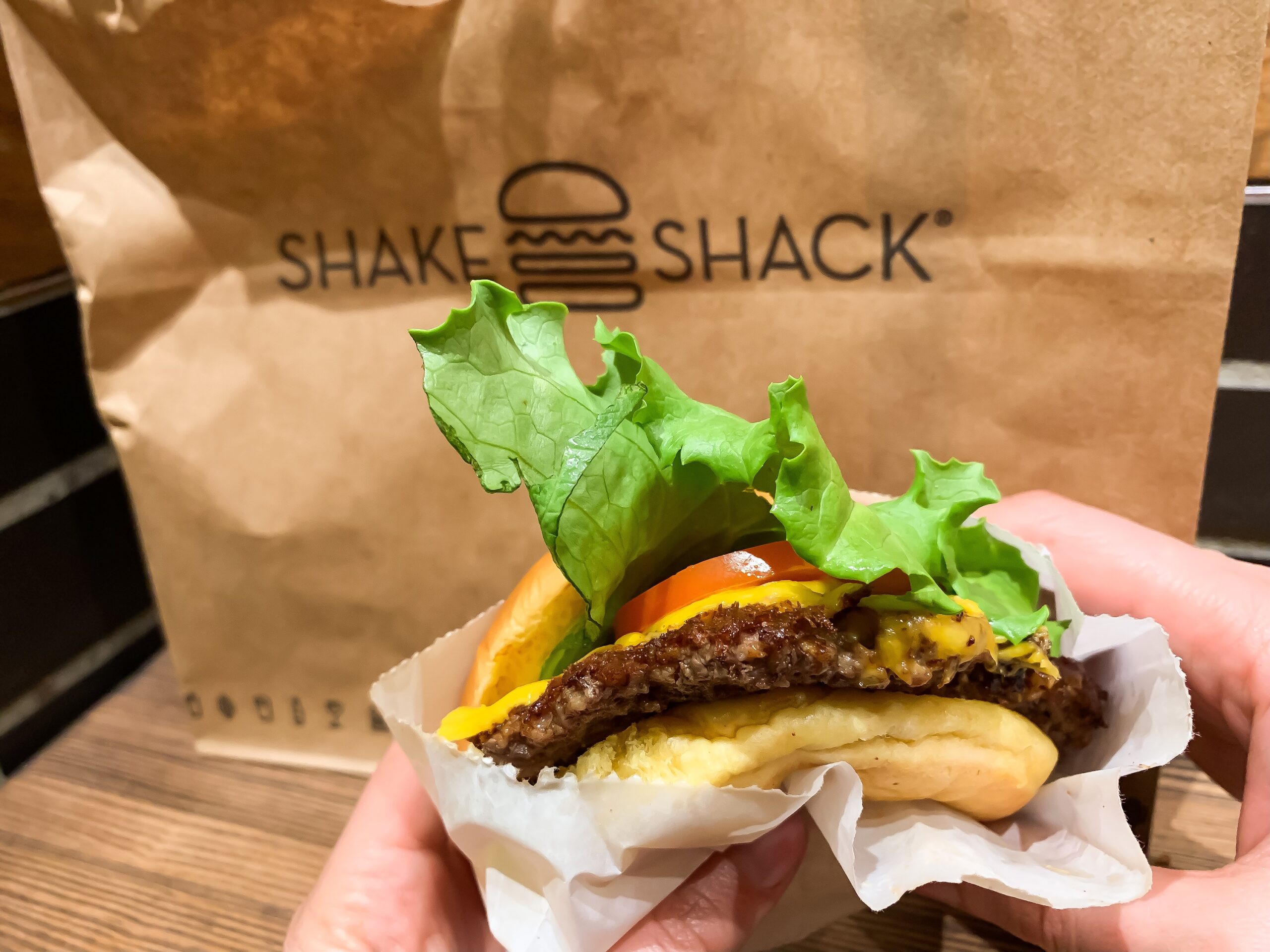
- Single ShackBurger Lettuce Wrap (23g protein): A quarter-pound beef patty with American cheese, tomato, and ShackSauce served in a lettuce wrap instead of a bun.
- Chicken Shack Lettuce Wrap (27g protein): A breaded chicken breast with pickles and buttermilk herb mayo, also served in a lettuce wrap.
- Gluten-Free Double ShackBurger (47g protein): Two quarter-pound beef patties with American cheese, tomato, and ShackSauce on a gluten-free bun.
- Double Veggie Shack Lettuce Wrap (25g protein): Two vegetable patties made with mushrooms, sweet potatoes, carrots, farro, and quinoa, topped with American cheese, crispy onions, pickles, and ShackSauce in a lettuce wrap.
- Double SmokeShack Lettuce Wrap (52g protein): Two quarter-pound beef patties with American cheese, applewood-smoked bacon, cherry peppers, and ShackSauce served without the bun.
- Double Avocado Bacon Burger Lettuce Wrap (51g protein): Two quarter-pound beef patties with American cheese, avocado, bacon, and ShackSauce in a lettuce wrap.
Shake Shack Good Fit menu: Nutrition information
The Good Fit menu includes beef, chicken, and veggie burgers served with the bun removed or swapped out. The main nutritional difference comes from cutting back on refined carbohydrates when a bun is replaced with a lettuce wrap. Otherwise, most of the ingredients—like the patties, cheese, sauces, and toppings—stay the same.
Because of that, protein levels are generally similar to the standard menu items. Total calories tend to depend more on whether you choose a single or double patty and what toppings are included, rather than the bun swap itself.
Noom’s Most Powerful Program
A dual-pathway GLP-1 and behavior change for lasting results.
| Item | Calories | Protein | Carbs |
|---|---|---|---|
| Single ShackBurger Lettuce Wrap | 330 | 23g | 3g |
| Chicken Shack Lettuce Wrap | 420 | 27g | 11g |
| Gluten-Free Double ShackBurger | 740 | 47g | 3g |
| Double SmokeShack Lettuce Wrap | 690 | 52g | 5g |
| Double Avocado Bacon Wrap | 690 | 51g | 4g |
| Double Veggie Shack Wrap | 740 | 25g | 3g |
Single-patty options provide a moderate amount of calories and protein. Double builds deliver substantially more protein in one meal, along with more total calories. For someone focusing on higher protein or lower refined carbohydrates, these swaps may help adjust macronutrient balance. How well they fit into a plan depends on overall calorie intake and dietary patterns across the day.
Is the Shake Shack GLP-1 menu healthy?
Whether the Good Fit menu is healthy for you depends on what your goals are.
If you are looking for menu items with higher protein, lower refined carbohydrates, and gluten-free flexibility, then some items from Shake Shack’s Good Fit Menu could work for you.
Here’s how the new items stack up to their traditional menu items:
| Item Comparison | Calorie difference (est.) | Carb difference (est.) | Protein difference (est.) |
|---|---|---|---|
| Single ShackBurger Lettuce Wrap vs. Single ShackBurger | 170 fewer calories | 23 g fewer carbs | 1 g less protein |
| Chicken Shack Lettuce Wrap vs. Chicken Shack | 130 fewer calories | 36 g fewer carbs | 1 g less protein |
| Gluten-Free Double ShackBurger vs. Double ShackBurger | 10 more calories | 3 g fewer carbs | No meaningful difference |
| Double SmokeShack in Lettuce Wrap vs. Double SmokeShack | 210 fewer calories | 40 g fewer carbs | 1 g less protein |
| Double Avocado Bacon Burger in Lettuce Wrap vs. Traditional Version | 230 fewer calories | 41g fewer carbs | 1 g less protein |
| Double Veggie Shack Lettuce Wrap vs. Double Veggie Shack | 90 fewer calories | 28g fewer carbs | 1 g less protein |
Shake Shack Good Fit Menu: What stands out
The Good Fit menu is positioned as a higher-protein, lower-carb way to order at Shake Shack. But beyond the label, what actually changes nutritionally?
When you look closely, most of the differences come down to how the items are assembled—primarily removing the bun or offering a gluten-free option—rather than reformulating the core ingredients. That shift meaningfully reduces refined carbohydrates and modestly lowers calories, but it doesn’t dramatically alter protein, saturated fat, or sodium levels.
Here’s a closer look at what stands out — and what stays the same.
Many of the items are lower in carbs
The biggest change is carbohydrate reduction from removing the bun on some options. That can cut a meaningful number of refined carbs and lower total calories at the same time. For someone watching blood sugar or trying to moderate refined carbohydrates, that swap may help. The gluten-free bun option removes gluten but does not significantly change calories, carbohydrates, or protein compared to the standard version.
Protein is high in relation to the calories
You do get a substantial amount of protein relative to calories, especially in the lettuce-wrapped builds. Protein helps preserve muscle during weight loss, increases fullness between meals, and digests slowly. For people taking GLP-1 medications, protein becomes especially important because it can help stop the loss of muscle while losing weight.
But Shake Shack’s traditional menu items are already high in protein. The protein sources haven’t changed, which means protein levels are similar to the originals. The shift is mostly about removing refined carbohydrates and lowering calories, not dramatically increasing protein.
It’s also worth noting that muscle maintenance is best supported when protein is spread across meals rather than concentrated in one sitting. Getting 45 to 52 grams in a double burger may help you hit your daily target, but consistent intake throughout the day tends to be more effective for preserving muscle over time.
Saturated fat remains a consideration
Because many of the core ingredients haven’t changed, saturated fat levels likely remain similar to the traditional versions. Double burgers can contain roughly 14 to 20 grams of saturated fat, which meets or exceeds the recommended daily limit of about 13 grams on a 2,000-calorie diet. Higher saturated fat intake has been associated with elevated LDL cholesterol over time, which is linked to increased cardiovascular risk.
That doesn’t mean these items can’t fit into someone’s eating pattern. But even if weight loss is the primary goal, overall dietary balance—including saturated fat intake across the day—still matters.
Fiber is limited
Aside from the Veggie Shack, most of the items aren’t strong sources of fiber. Removing the bun reduces refined carbs, but it doesn’t add back fiber. Fiber supports digestion, improves satiety, helps stabilize blood sugar, and plays a role in heart health. Without fiber-rich sides or additional vegetables, these meals remain relatively low in this key nutrient.
The Good Fit menu shifts macronutrient balance toward higher protein and lower refined carbs, but it does not fundamentally change the levels of saturated fat or add in other nutrients. For some people, that shift may make it easier to align a fast-food meal with specific goals. Long-term health, however, depends on the broader pattern of eating—not a single menu category.
Sodium can still be high
Even with the bun removed, sodium levels remain elevated because most of the sodium comes from the beef, cheese, sauces, and toppings—not the bread. Many double burgers contain roughly 1,800 to 2,300 milligrams of sodium, which can approach or exceed the recommended daily limit of 2,300 milligrams per day for most adults. For people who are salt-sensitive or managing blood pressure, that’s something to be aware of. As with saturated fat, these meals can fit into a broader pattern—but balance across the day matters.
Can the Shake Shack GLP-1 menu help with weight loss?
So how does this menu actually fit into your goals? It depends on what those goals are.
If you’re taking a GLP-1 medication
A higher-protein burger served without the bun may help you get more protein with fewer refined carbohydrates and slightly fewer calories. That can be helpful when appetite is lower, and you want each bite to provide meaningful nutrition.
But many of these items are still relatively high in fat and saturated fat. For some people using GLP-1 medications—where digestion is already slowed—heavier foods can make side effects like nausea, bloating, or constipation worse.
If you’re following a lower-carb eating pattern
Swapping the bun for lettuce can make it easier to stay within a lower-carb target while eating at a fast-food restaurant.
Access GLP-1 Weight Loss with Noom
Explore a wide range of prescription medications supported by Noom’s program.
Microdose GLP-1rx
Noom GLP-1rx
Noom GLP-1rx Plus
Wegovy®
Ozempic®
Metformin
Zepbound®
Mounjaro®
Liraglutide
But protein or carbs alone don’t determine weight loss. Progress still depends on the bigger picture—overall calorie intake, nutrient balance, and consistent habits over time.
Portion size still matters
A single lettuce-wrapped burger can fit into many structured eating plans. A double bacon cheeseburger with sauce—even without the bun—can still be calorie-dense enough to slow progress if it becomes a frequent choice. Removing the bread doesn’t automatically make a meal light.
Long-term health is about overall diet quality
Lower-carb patterns can work well for some people, but sustainable nutrition still depends on variety and nutrient density.
Fiber-rich foods like legumes, whole grains, fruits, and vegetables support digestion, fullness, blood sugar regulation, and heart health. Healthy fats from foods like nuts, seeds, olive oil, avocado, and fish also play an important role in cardiovascular and metabolic health.
The Good Fit menu can shift the balance toward more protein and fewer refined carbs, which may align with certain goals. But lasting weight loss usually comes from the overall pattern of what you eat—not from a single menu choice.
FAQs about Shake Shack’s Good Fit menu
Is Shake Shack GLP-1 friendly?
Shake Shack’s Good Fit menu can be GLP-1 friendly, but it depends on what you order. Many of the featured items are high in protein and available as lettuce wraps, which can help reduce refined carbohydrates and support protein needs while appetite is lower. But one side effect of GLP-1 medication is that fatty foods can be difficult to digest.
Several options are still calorie-dense and high in saturated fat. A double bacon cheeseburger without a bun may be lower in carbs, but it’s still a rich meal. If you’re using a GLP-1 medication, focusing on leaner protein portions, reduced calories, and overall balance of nutrients will matter.
How can I make having a meal at Shake Shack healthier?
Small swaps can make a meaningful difference. Choosing a single patty instead of a double reduces calories and saturated fat. Opting for a lettuce wrap instead of a bun can cut around 150 to 180 calories from refined carbohydrates. Skipping or going light on sauces, bacon, and fried toppings can further reduce saturated fat and calorie intake.
It also helps to think about the bigger picture. Pair your meal with a calorie-free drink instead of sugary soda, and aim for balance with fiber-rich foods, vegetables, and healthy fats throughout the rest of your day. Healthy habits are built across meals—not decided by one order.
Can I get a lettuce-wrapped burger at Shake Shack?
Yes. Shake Shack offers lettuce wraps as part of its Good Fit menu, and you can also request a lettuce wrap for many standard burgers. This swap replaces the bun with large lettuce leaves, lowering carbohydrates and overall calories.
While lettuce wraps reduce refined carbs, they don’t change the fat content of the burger itself—so portion size and toppings still matter.
Does Shake Shack have gluten-free buns?
Yes—Shake Shack offers gluten-free buns for many of its burgers, including options on the Good Fit menu like the Gluten-Free Double ShackBurger. This makes it easier for people avoiding gluten to enjoy a classic Shake Shack sandwich without the traditional wheat bun. If you are concerned about cross-contamination with gluten, be sure to ask the staff.
What’s the healthiest option at Shake Shack?
“Healthy” depends on your goal — fewer calories, less saturated fat, plant-based, or higher protein.
If your priority is keeping calories moderate while still getting protein, the Single ShackBurger Lettuce Wrap comes in at about 330 calories and delivers 23 grams of protein by removing the bun. A plain Single ShackBurger on a bun has about 370 calories and 18g fat, but the burger is plain.
If you’re looking to avoid red meat or dairy, the Veggie Shack (vegan) in a lettuce wrap is another lighter option at around 310 calories and 18g of fat. It eliminates beef and can be made without dairy-based toppings.

The Easy Way
to lose weight and get healthy.
The bottom line: The Shake Shack Good Fit menu can be healthier depending on your nutrition goals
The rise of high-protein fast-food menus reflects a real shift in how people are eating. With more people prioritizing protein, reducing refined carbohydrates, or using GLP-1 medications that suppress appetite, restaurants are adapting. Shake Shack’s Good Fit menu makes it easier to order a lower-carb or gluten-free option. For some people—especially those intentionally following lower-carb or calorie-controlled plans—that structure can be helpful.
But the label alone doesn’t guarantee a healthier meal. While removing the bun lowers refined carbohydrates and modestly reduces calories, it doesn’t fundamentally change the saturated fat, sodium, or overall richness of many of the items. Sustainable weight loss and long-term health still depend on total calorie balance, nutrient quality, fiber intake, and consistency over time. The Good Fit menu can fit into a thoughtful plan — but it works best as part of a broader pattern, not as a shortcut to better health.
Weight loss—and long-term health—is built on progress, not perfection. One fast-food meal won’t define your progress, but the habits you repeat will.
If you’re looking for ways to improve your habits and build a sustainable plan, Noom can help. Download the Noom app on iOS & Android to get daily lessons on how to build healthy habits that last, get exclusive recipes, and more.
Editorial standards
At Noom, we’re committed to providing health information that’s grounded in reliable science and expert review. Our content is created with the support of qualified professionals and based on well-established research from trusted medical and scientific organizations. Learn more about the experts behind our content on our Health Expert Team page.