What you’ll learn:
- Honey has more calories than sugar, but also offers small amounts of nutrients and antioxidants.
- Both can raise your blood sugar, but honey may lead to a slower rise thanks to its lower glycemic index.
- Moderation matters: Too much of either sweetener can add extra calories and contribute to weight gain over time.
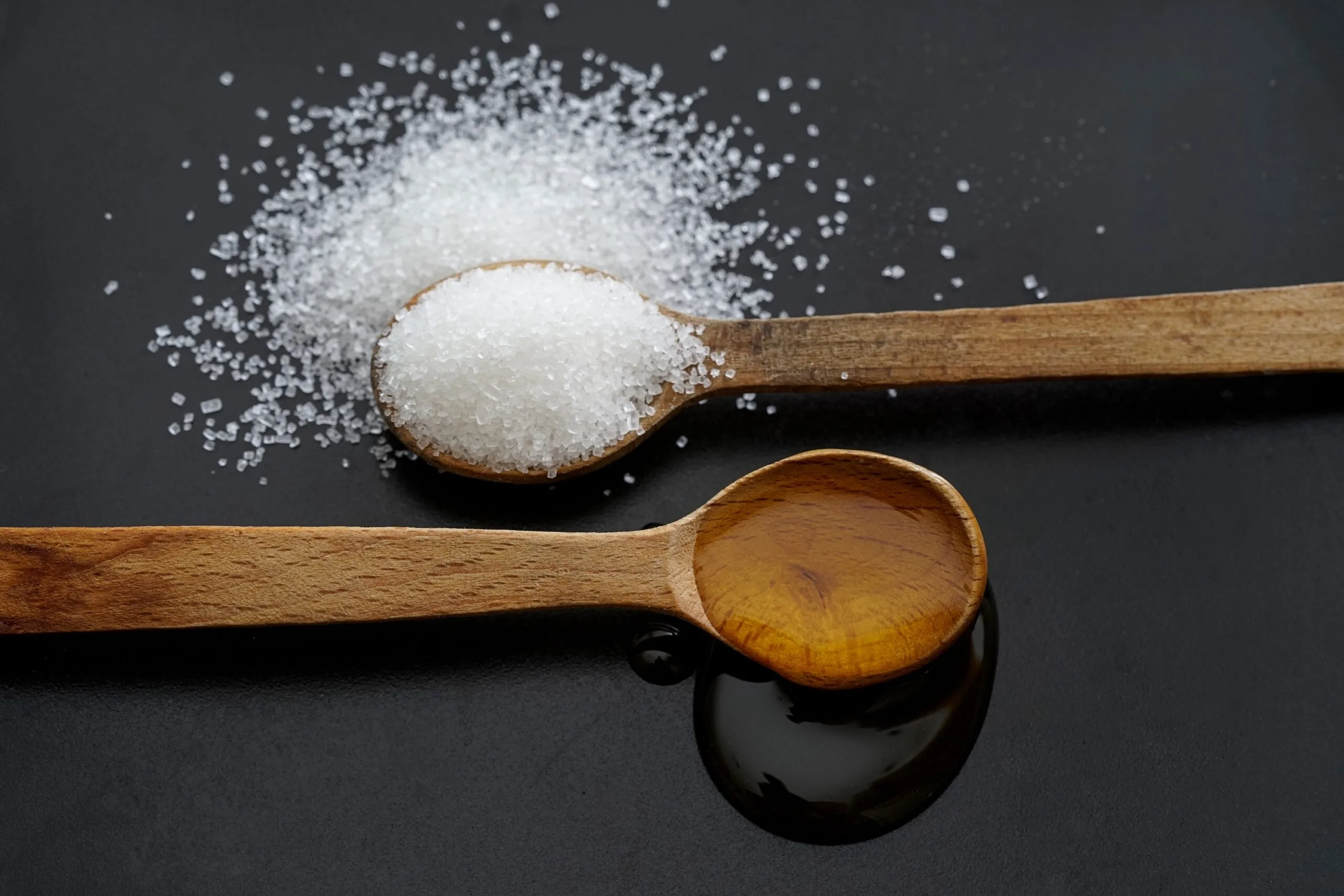
Is honey better than sugar?. It’s a common question, especially when you’re trying to make healthier choices. Both can sweeten your tea, yogurt, or baked treats—but does one actually have a health edge?
In this guide, we’ll take a closer look at these two popular sweeteners side by side, exploring what the research says about their impact on your health. We’ll break down differences in nutritional value, calorie content, blood sugar effects, and even their potential role in weight loss.
At Noom, our goal is to give you science-backed insights that help you make informed choices—so you can build habits that support your long-term goals without giving up the foods you love.
Honey vs. sugar: What are the differences?
At their core, honey and sugar are both simple carbohydrates, meaning they’re quickly broken down by your body to provide fast energy. Unlike complex carbs—found in fiber-rich foods like whole grains and vegetables—simple carbs digest quickly, which can lead to blood sugar spikes if eaten in excess.
But while both deliver on sweetness, they differ in calories, nutrient content, and how they affect your blood sugar. Let’s take a closer look.

The Easy Way
to lose weight and get healthy.
See if you qualify
Honey vs. sugar: How are they made?
Most of us have a general idea, but here’s a quick refresher:
- Sugar is typically produced from sugarcane or sugar beets. The plants are crushed to extract juice, which is boiled down to form crystals. These crystals are then refined into white sugar. Less processed forms, like brown sugar, retain some molasses, giving them a darker color and richer flavor.
- Honey is made by bees, who collect nectar from flowers and break it down into syrup inside their hives. After harvesting, honey may be filtered and pasteurized or left in its raw, unfiltered state. Some commercial honeys may also have added syrups, which can change their texture, flavor, and nutritional profile.
Honey vs. sugar: Does one have more calories?
Even though honey and sugar are both used to sweeten food, they’re not identical. They contain different amounts of calories per tablespoon, so using the same amount can have different effects on your overall intake.
- Sugar has 49 calories per tablespoon.
- Honey has 64 calories per tablespoon.
Let’s compare the full nutritional breakdown:
| Nutrient | Honey (1 tbsp / 21g) | Table sugar (1 tbsp / 12.5g) |
|---|---|---|
| Calories | 64 | 48 |
| Total Carbohydrates | 17.3 g | 12.6 g |
| Sugars | 17.2 g | 12.6 g |
| Glucose | 7.5 g | 6.3 g |
| Fructose | 9.5 g | 6.3 g |
| Protein | 0.1 g | 0 g |
| Fat | 0 g | 0 g |
| Water | 3.6 g | 0 g |
| Calcium | 1 mg | 0 mg |
| Potassium | 11 mg | 0 mg |
| Iron | 0.1 mg | 0 mg |
Honey vs. sugar: Is honey more nutritious?
Honey often gets a health halo because it contains trace amounts of vitamins, minerals, and antioxidants, while white sugar provides none. But does that really make a difference? Let’s take a closer look:
- Sugar: Pure sugar (sucrose) provides quick energy but no nutritional value—no vitamins, minerals, or antioxidants. In small amounts, it’s fine. But too much can increase the risk of weight gain, tooth decay, insulin resistance, and high blood sugar.
- Honey: Honey contains small amounts of potassium, iron, and antioxidants, especially in darker or raw varieties. However, the nutrient amounts are so small that their health impact is minimal unless consumed in large quantities, which also adds excess calories.
Bottom line: Both are added sugars. While honey may offer a slight nutritional edge, moderation is still what matters most.
Honey vs. sugar: Unique health benefits of honey
Honey offers some unique benefits beyond just adding sweetness to foods:
- Honey may soothe sore throats and coughs: Honey is a natural remedy for minor cold symptoms, and research supports its use. One study found that honey worked better than over-the-counter remedies like cough suppressants and antihistamines for easing coughs from upper respiratory infections. Note: It should never be given to children under one year old due to the risk of infant botulism.
- Honey has a more complex flavor: Different honey varieties reflect the flowers bees visited, adding depth to recipes.
- Honey is less processed: Compared to refined sugar, most honey undergoes minimal processing. Raw honey is unfiltered and may retain more nutrients.
- A little honey goes a long way: Honey contains more fructose than glucose, making it taste sweeter—you might need less to achieve the same sweetness.
Does honey or sugar raise blood sugar more?
Blood sugar refers to the amount of glucose in your bloodstream. When blood sugar spikes too often, it can lead to insulin resistance, weight gain, and a higher risk of type 2 diabetes.
The glycemic index (GI) measures how quickly a food raises blood sugar:
- Sugar (sucrose): GI of about 68
- Honey: GI of around 55
That means honey may raise blood sugar more gradually than sugar, but both still spike it, especially when consumed in large amounts.
Lower-GI diets have been linked to health benefits like:

See if your insurance
covers GLP-1s.
The form only takes 2 minutes to answer. We’ll handle the rest.
GET STARTED- Lower cholesterol and blood pressure
- Reduced BMI in people with prediabetes or type 2 diabetes
- Lower risk of heart disease
Does this mean honey is healthy?
Even though honey has a lower GI and a few nutrients, it’s still an added sugar, and your body treats all added sugars similarly when it comes to metabolism and weight.
The American Heart Association recommends:
- No more than 6 teaspoons per day for women
- No more than 9 teaspoons per day for men
Yet most Americans consume closer to 17 teaspoons per day.
That includes all added sugars—honey, white sugar, maple syrup, and anything ending in “-ose” (like glucose or fructose).
How to choose the healthiest honey
Some types of honey offer more nutrients than others. Their benefits depend on how they’re made and what flowers the bees visited..
Here’s what to consider when choosing honey:
- Floral origin matters: The source of nectar influences flavor and nutrition. For example, clover honey is mild and light, while buckwheat honey is darker and contains more vitamins and minerals, including niacin (B3) and riboflavin (B2).
- Darker honey = more antioxidants: Varieties like buckwheat and Manuka honey typically have higher levels of antioxidants like flavonoids and phenolic acids. These compounds may help protect the body from oxidative stress, potentially reducing the risk of chronic diseases.
- Raw and unfiltered is best: Minimally processed honey retains more beneficial compounds. Raw honey hasn’t been pasteurized or filtered, so it may preserve nutrients lost in standard processing.
- Local honey for allergy relief? Some believe that local honey, which may contain trace amounts of regional pollen, could help build tolerance to seasonal allergies. While the idea is promising, more research is needed to confirm its effectiveness.
How to choose sugar: Is one type better than the other?
Sugar is sugar, but depending on the type, it varies in texture, flavor, and how it behaves in recipes. Regardless of labels like “organic” or “raw,” your body processes them the same way.
Here’s a quick rundown of common types:
- White sugar: Typical table sugar is highly refined with a clean, neutral flavor that blends well in almost everything.
- Brown sugar: This one’s mixed with molasses, giving it a soft texture and a rich, caramel-like taste—great in cookies and sauces.
- Raw sugars (like turbinado or Demerara): These sugars are less refined and slightly coarser, with a light molasses flavor. They’re often used as a topping or in drinks.
- Powdered (confectioners’) sugar: This super fine sugar is typically mixed with cornstarch and is ideal for frostings and dusting baked goods.
You’ll also find specialty sugars with unique flavors:
- Coconut sugar: Made from coconut palm sap, with a mild caramel taste.
- Maple sugar: Has a rich, earthy sweetness that’s great in seasonal baking.
- Palm sugar: Common in Southeast Asian recipes, with a deep, almost toffee-like flavor.
- Corn sugar: Also called glucose, it’s often used in processed foods and syrups.
Keep in mind: Many sugars hide behind different names on labels—like “evaporated cane juice,” “organic cane sugar,” or “beet sugar.” They may sound more natural, but your body processes them just like white sugar.
How much sugar (or honey) is too much?
The American Heart Association recommends limiting added sugar to 6 teaspoons per day for women and 9 for men, but most Americans consume closer to 17 teaspoons a day.
And yes, that includes all added sugars: white sugar, honey, maple syrup, and anything ending in “-ose” (like glucose or fructose).
Even natural sweeteners can add up quickly, especially in processed foods and drinks. While a drizzle of honey in your tea or a spoonful of sugar in your baking is perfectly fine, keeping your overall intake in check can help reduce the risk of weight gain, type 2 diabetes, and heart disease.
Need a simple way to cut back? Try tracking your added sugars for a few days—awareness alone can make a big difference.


Honey vs. sugar: It’s your choice
So, is honey the healthier option? Not exactly. While honey may offer some extra antioxidants and a slightly lower glycemic impact, both honey and sugar are added sweeteners, and the real key is how much you use, not just which one you choose.
No sweetener is “bad” on its own. It’s your overall eating pattern that matters most for your health and weight goals. Choose the one that tastes the best and then use it in moderation.
Whether you’re swapping sugar for honey or just learning how to balance both, Noom can help you make smart, sustainable choices—without giving up the foods you love.
Editorial standards
At Noom, we’re committed to providing health information that’s grounded in reliable science and expert review. Our content is created with the support of qualified professionals and based on well-established research from trusted medical and scientific organizations. Learn more about the experts behind our content on our Health Expert Team page.