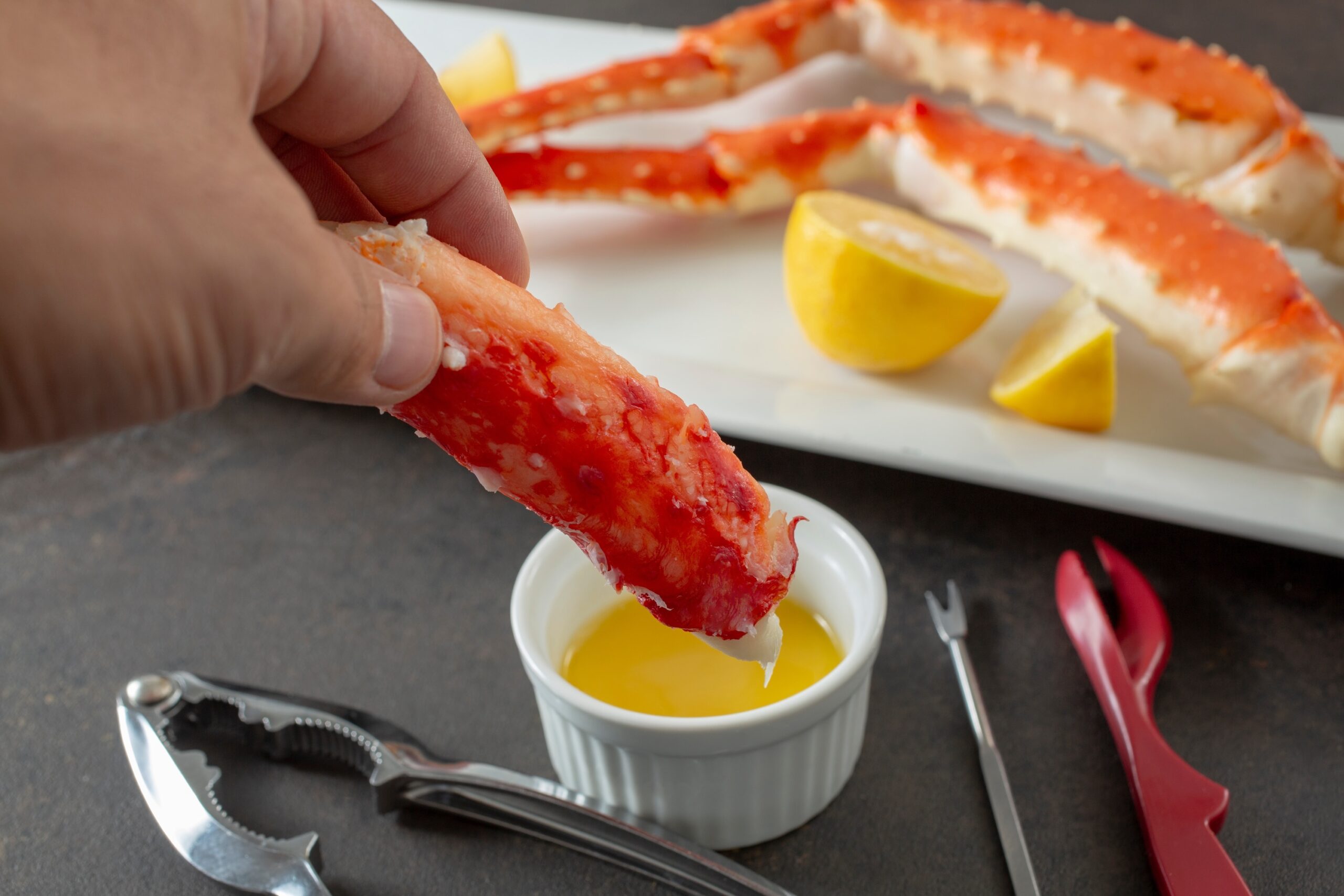
Crab might feel like a special-occasion food, but it’s also a surprisingly practical way to add protein to your meals. Whether you’re cracking open snow crab legs, adding lump crab meat to a salad, or ordering crab cakes at a restaurant, you might wonder: Is crab healthy? And can it help with weight loss?
The short answer is yes. Crab is naturally low in calories and fat, high in protein, and rich in important nutrients, including vitamin B12. A 4-ounce serving of jumbo lump crab meat has about 95 calories and 20 grams of protein, making it a filling option that can fit well into a weight-loss plan.
But not all crab dishes are nutritionally equal. Crab legs served with melted butter, fried crab cakes, crab rangoon, and imitation crab can have very different calorie, fat, and sodium profiles. Here’s what to know about crab’s nutrition and health benefits, how different types compare, and the healthiest ways to enjoy it.
✅ Quick answer
Yes, crab is healthy! Plain crab meat is a lean, carb-free source of protein that’s also rich in vitamin B12, zinc, and selenium. A 4-ounce serving of jumbo lump crab has about 94 calories and 20 grams of protein, which can help you feel full and maintain muscle while losing weight. Crab is also low in saturated fat, though some varieties can be high in sodium. How you prepare it matters, too: Butter, creamy sauces, and breading can add calories and carbs. Imitation crab typically has less protein and more carbs than real crab.
🚀 Weight-loss benefits of crab
- High in protein for very few calories – A 4-ounce serving of jumbo lump crab has about 20 grams of protein for just 94 calories. Protein helps you feel full and satisfied, which can make it easier to manage your appetite while losing weight.
- Low in calories for the amount of food – Crab is about 80% water, with no carbs and less than 1 gram of fat per 4-ounce serving. A generous 6-ounce portion has about 140 calories, less than half the calories in the same amount of farmed salmon.
- Protein helps preserve muscle during weight loss – A meta-analysis of 24 trials found that higher-protein diets helped people lose slightly more fat and preserve more lean mass during calorie restriction. Crab is an easy way to add protein without many extra calories.
⚠️ Things to be mindful of when eating crab
- Sodium can add up – Four ounces of jumbo lump crab can contain around 450 milligrams of sodium, about 20% of the recommended daily limit. Some pre-cooked crab legs contain considerably more. Excess sodium can cause temporary water retention and, over time, contribute to high blood pressure.
- Butter, mayo, and frying add calories – Two tablespoons of melted butter add about 200 calories, more than twice the calories in the crab itself. Crab cakes, creamy dips, and fried dishes can also be higher in calories. Try lemon, herbs, or a little butter instead.
- Imitation crab has less protein – Imitation crab (surimi) is made primarily from processed fish. Four ounces has about 108 calories, 9 grams of protein, and 17 grams of carbs, compared with 94 calories, 20 grams of protein, and no carbs in real crab. It’s still an option, but real crab offers more protein for about the same calories.
🥗 Crab: Nutrition facts
Crab’s sweet, delicate flavor is a big part of its appeal, but its nutrition is impressive, too. It’s packed with protein, naturally low in fat, and surprisingly light on calories. Here’s what you get in a 4-ounce serving of jumbo lump crab meat:
| Nutrient | Amount | % RDA* |
|---|---|---|
| Calories | 94 | — |
| Protein | 20.3 g | 41% |
| Total carbs | 0 g | 0% |
| Fiber | 0 g | 0% |
| Sugars | 0 g | — |
| Total fat | 0.8 g | 1% |
| Saturated fat | 0.2 g | 1% |
| Omega-3 (EPA + DHA) | 0.2 g | — |
Source: USDA FoodData Central, cooked blue crab, scaled to 4 ounces. Jumbo lump refers to the largest pieces of crab meat. Nutrition varies by species and brand. Percentages use FDA Daily Values as reference amounts for a 2,000-calorie diet; individual recommended dietary allowances (RDAs) may vary.
Noom’s Most Powerful Program
A dual-pathway GLP-1 and behavior change for lasting results.
The standout is protein: You’re getting about 20 grams for fewer than 100 calories, making crab an easy way to build a satisfying meal without adding a lot of calories. It also provides a little heart-healthy omega-3 fat.
And because crab has no fiber, it’s a great match for colorful vegetables, a hearty grain salad, or whole-grain toast. Think lemony crab over greens, crab-stuffed avocado, or a simple crab salad with crunchy vegetables. You get the sweet, savory flavor of crab along with more fiber and nutrients to round out your meal.
💊 Crab: Vitamins and minerals
Crab isn’t just a great source of protein. It’s also packed with vitamins and minerals that support everything from your immune system to your energy levels. Here’s what a 4-ounce serving provides:
| Vitamin/mineral | Amount | % RDA* |
|---|---|---|
| Vitamin B12 | 3.8 µg | 157% |
| Copper | 0.9 mg | 102% |
| Selenium | 49 µg | 88% |
| Zinc | 4.3 mg | 39% |
| Pantothenic acid (B5) | 1.1 mg | 22% |
| Phosphorus | 265 mg | 21% |
| Niacin (B3) | 3.1 mg | 19% |
| Sodium | 448 mg | 19% |
| Folate | 58 µg DFE | 14% |
| Vitamin B6 | 0.18 mg | 11% |
| Magnesium | 41 mg | 10% |
| Calcium | 103 mg | 8% |
| Riboflavin (B2) | 0.10 mg | 8% |
| Potassium | 294 mg | 6% |
| Vitamin C | 3.7 mg | 4% |
| Iron | 0.6 mg | 3% |
Source: USDA FoodData Central, cooked blue crab, scaled to 4 ounces. Percentages use FDA reference values for a 2,000-calorie diet. Sodium is compared with the recommended daily limit of 2,300 mg. Nutrient amounts vary by species and brand.
A few nutrients really stand out:
- Vitamin B12: One serving provides more than your daily requirement. B12 helps your body make red blood cells and keeps your nerves functioning properly.
- Selenium and copper: Crab provides nearly all your daily selenium and copper needs. Selenium supports thyroid function and helps protect cells from damage, while copper helps your body use iron.
- Zinc: With nearly 40% of your daily needs, crab gives your immune system a boost and supports wound healing.
- B vitamins: Crab also provides niacin, B5, and B6, which help your body turn food into usable energy.
The one nutrient worth watching is sodium. Four ounces contains about 448 milligrams, though some packaged varieties have less. If you’re watching your sodium intake, check the label and try flavoring crab with fresh lemon, garlic, or herbs instead of adding more salt.
🔍 Nutrient breakdown of crab
Glycemic index (GI) of crab
Glycemic index: Low (not formally measured)
💡 Tip: The glycemic index (GI) measures how quickly carbohydrate-containing foods raise blood sugar. Since crab has no carbs, it has little direct effect on blood sugar. What you serve with it, like rice, corn, or potatoes, will have a bigger impact.
Is crab high in protein?
✔️ Yes. Four ounces of jumbo lump crab provides about 20 grams of complete protein, containing all nine essential amino acids. Protein helps keep you satisfied and supports muscle maintenance.
Is crab high in fiber?
❌ No. Like other animal proteins, crab contains no fiber.

The Easy Way
to lose weight and get healthy.
💡 Tip: Pair crab with fiber-rich vegetables, like roasted broccoli or asparagus, or serve it over a whole-grain salad for a more balanced, satisfying meal.
Is crab low in carbs?
✔️ Yes. Plain crab has zero carbs, making it a naturally low-carb protein option.
💡 Tip: Crab cakes, breaded crab, and imitation crab can contain added starches and carbs. Check ingredients if you’re watching your carbohydrate intake.
Is crab gluten-free?
✔️ Yes. Plain crab is naturally gluten-free. But imitation crab may contain wheat starch, and crab cakes often include breadcrumbs. Check labels if you avoid gluten.
Is crab good for fat loss?
✔️ Yes, it can be. Crab’s combination of high protein and relatively few calories makes it a great option for weight management. Enjoy it steamed, chilled in salads, or with lemon and a little melted butter to keep the meal satisfying without adding too many calories.
🍽️ Diet compatibility: Which diets include crab?
Crab is naturally low in calories, high in protein, and carb-free, making it easy to enjoy with many eating styles. Here’s how it fits into some popular diets:
| Diet | ✅ Yes / ❌ No | Why |
|---|---|---|
| Keto | ✅ | With zero carbs, crab fits easily into a keto diet. Pair it with avocado, olive oil, or melted butter for healthy fats. Imitation crab contains more carbs, so portions matter. |
| Paleo | ✅ | Plain crab is a whole-food protein that fits paleo guidelines. Skip imitation crab and heavily processed or breaded preparations. |
| Mediterranean | ✅ | Crab is a natural fit for this seafood-friendly diet. Try it with lemon, olive oil, fresh herbs, vegetables, or whole grains. |
| Vegan | ❌ | Crab is an animal product. Plant-based alternatives made with hearts of palm, jackfruit, or chickpeas can offer a similar texture, though protein content varies. |
| Gluten-free | ✅ | Plain crab is naturally gluten-free. Check ingredients in imitation crab, crab cakes, and sauces, which may contain wheat. |
The takeaway? Crab is a versatile protein that works with many eating patterns. Whether you’re enjoying it chilled over a salad, tossed with olive oil and lemon, or served with roasted vegetables, you don’t need a restrictive diet to enjoy its health benefits.
🌟 Is crab meat healthy? The health benefits and drawbacks
Crab is more than a delicious seafood option. Its combination of lean protein, vitamins, and minerals can support several aspects of your health. Here’s where the benefits are strongest and where the research is more limited.
Metabolic health: Is crab good for your metabolism?
- Supports metabolism? ✔️ Yes, indirectly. Crab provides protein to help maintain muscle and B vitamins that help your body turn food into energy. But eating crab won’t noticeably speed up your metabolism.
- Improves insulin sensitivity? Not directly. Crab has no carbohydrates, so it has little immediate effect on blood sugar. There’s no evidence that eating crab itself improves insulin sensitivity.
- Effect on fat storage? Potentially helpful. Crab’s high-protein and low-calorie combo makes it a satisfying choice when you’re trying to manage your weight. Fat loss still depends on your overall calorie intake.
Cholesterol impact: Does crab affect cholesterol levels?
- Does it lower LDL (bad) cholesterol? Not directly. Crab contains dietary cholesterol but very little saturated fat. Replacing foods high in saturated fat, such as fatty cuts of red meat, with crab may help support healthier LDL levels.
- Does it raise HDL (good) cholesterol? Not significantly. Crab contains some omega-3 fats, but there’s little evidence that eating it increases HDL.
- Overall impact on heart health? Potentially positive. Seafood is part of a heart-healthy eating pattern, and crab provides lean protein with little saturated fat. It contains fewer omega-3s than salmon or sardines, and sodium can be a consideration, especially in packaged crab.
💡 Tip: Try crab tossed with olive oil, fresh lemon, garlic, and herbs for a flavorful, heart-healthy meal.
Can I eat crab for a calorie deficit?
✔️ Absolutely. Four ounces of crab has about 94 calories and 20 grams of protein. Even a generous 8-ounce portion provides around 40 grams of protein for fewer than 200 calories, leaving plenty of room for satisfying sides.
💡 Tip: Enjoy steamed crab with a little melted butter. One teaspoon adds about 34 calories, compared with roughly 200 calories for two tablespoons.
Is crab rich in antioxidants?
It provides antioxidant-supporting nutrients. Crab is rich in selenium, copper, and zinc, which help your body’s natural antioxidant defenses protect cells from damage. Pair it with colorful vegetables for additional antioxidants and fiber.
Does crab support gut health and digestion?
It’s a good protein option, but it doesn’t provide fiber. Crab can be part of a gut-friendly diet, especially when served with vegetables, beans, or whole grains that help nourish beneficial gut bacteria. People with shellfish allergies should avoid it.
Does crab help you feel full and less hungry?
✔️ Yes. Protein helps promote fullness, and about 85% of crab’s calories come from protein. That makes it a satisfying choice for meals without adding many calories.
Satiety level: High
💡 Tip: Try a crab salad with cucumber, tomatoes, avocado, and lemon dressing for a meal that combines protein, fiber, and healthy fats.
Does crab help with nighttime cravings?
It can be a satisfying option. If you’re craving something savory, chilled crab with lemon or a small crab salad provides protein without many calories. There’s no evidence that crab specifically prevents nighttime cravings.
Does crab help reduce inflammation?
Possibly, but the effect is likely modest. Crab provides small amounts of EPA and DHA, omega-3 fats involved in regulating inflammation. Salmon and sardines are richer sources, but crab can still contribute to a balanced, anti-inflammatory eating pattern.
Is crab beneficial for brain health?
✔️ It provides important nutrients. Crab is especially rich in vitamin B12, which supports healthy nerve function, and contains a little DHA, an omega-3 fat important for the brain. These nutrients help maintain normal function, though eating more crab won’t necessarily improve memory or concentration.
Can crab improve skin and hair health?
It can help meet your nutritional needs. Crab provides protein for hair growth, zinc for skin repair, and copper for connective tissue. These nutrients are important for healthy skin and hair, but eating extra won’t necessarily improve their appearance if you’re already getting enough.
Access GLP-1 Weight Loss with Noom
Explore a wide range of prescription medications supported by Noom’s program.
Microdose GLP-1rx
Noom GLP-1rx
Noom GLP-1rx Plus
Wegovy®
Ozempic®
Metformin
Zepbound®
Mounjaro®
Liraglutide
Can crab help balance hormones?
It supports normal hormone function, but isn’t a treatment. Selenium helps your body regulate thyroid hormones, while zinc plays a role in hormone production. Crab is a good source of both, but it won’t correct a hormonal imbalance on its own.
🍽️ Best ways to eat crab for weight loss
- Enjoy crab legs or jumbo lump with lemon and herbs: Sweet, tender crab doesn’t need much to taste delicious. Try steamed crab legs with fresh lemon, garlic, and Old Bay, or toss jumbo lump with fresh herbs. Four ounces of crab meat has about 94 calories and 20 grams of protein.
- Add crab to salads, wraps, and soups: Toss canned or fresh crab into a crunchy salad, tuck it into lettuce wraps with avocado, or add it to a vegetable-packed soup. You’ll get plenty of protein, while the vegetables add fiber and help make the meal more satisfying. Check sodium levels on packaged crab.
- Try lighter sauces and homemade crab cakes: A little melted butter goes a long way. One teaspoon adds about 34 calories, or try a Greek yogurt-based dipping sauce with lemon and herbs. For crab cakes, use plenty of crab, a little binder, and bake or air-fry until golden instead of deep-frying.
🦀 Crab vs. other seafood: How does it compare?
Crab is one of the leanest seafood options, but how does it compare with shrimp, clams, mussels, calamari, and salmon? All provide protein and important nutrients, but their calories and fat content vary. Here’s how they stack up per 4-ounce cooked serving:
| Seafood | Calories | Protein | Carbs | Fat |
|---|---|---|---|---|
| Jumbo lump crab (blue crab) | 94 | 20 g | 0 g | 1 g |
| Shrimp | 112 | 27 g | 0 g | 0 g |
| Cod | 119 | 26 g | 0 g | 1 g |
| Clams | 167 | 29 g | 6 g | 2 g |
| Mussels | 195 | 27 g | 8 g | 5 g |
| Calamari (squid) | 105 | 18 g | 3 g | 2 g |
| Salmon (farmed Atlantic) | 234 | 25 g | 0 g | 14 g |
Values are approximate for 4 ounces of cooked seafood, rounded to the nearest whole number. Calamari refers to squid without breading or frying. Nutrition varies by species and preparation.
Here’s what stands out:
- For fewer calories: Crab, calamari, and shrimp are all light options that provide plenty of protein without much fat.
- For more protein: Clams, shrimp, cod, and mussels provide the most protein per serving.
- For vitamins and minerals: Clams are especially rich in iron and vitamin B12, while mussels provide iron, B12, and other important nutrients. Crab is particularly rich in B12, copper, selenium, and zinc.
- For healthy fats: Salmon has more calories, but it also provides considerably more heart-healthy omega-3 fats.
The bottom line: Crab is a delicious, lean protein that fits easily into a healthy eating plan. But variety matters. Mixing in shrimp, clams, mussels, calamari, and fatty fish like salmon helps you get a broader range of nutrients while keeping seafood meals interesting.
🦀 Is imitation crab healthy? Calories and nutrition facts
Imitation crab can be part of a healthy diet, but it’s nutritionally different from real crab. It’s made from surimi, a processed fish paste (usually Alaska pollock) mixed with starch, sugar, salt, and flavorings to give it a crab-like taste and texture. You’ll find it in California rolls, seafood salads, and crab rangoon.
Here’s how the two compare:
| Nutrient (per 3 ounces) | Imitation crab | Real crab |
|---|---|---|
| Calories | 81 | 71 |
| Protein | 7 g | 15 g |
| Carbs | 13 g | 0 g |
| Sugar | 5 g | 0 g |
| Sodium | 450 mg | 336 mg |
Values are approximate and vary by brand. Real crab refers to cooked blue crab meat.
The biggest difference is protein. Real crab has more than twice as much, along with more vitamin B12 and selenium. Imitation crab has a similar number of calories, but more carbs and sodium because of the added starches, sugar, and salt.
That doesn’t mean you need to skip your favorite California roll. Imitation crab can still fit into a balanced eating plan. For a more satisfying meal, pair it with vegetables and another protein source, like edamame, or enjoy it alongside a fiber-rich salad.
One thing to check: Imitation crab typically contains fish and may also contain shellfish, wheat, or egg, depending on the brand. Always read the ingredient list if you have food allergies.
🥟 Calories in popular crab dishes: Crab cakes, crab rangoon, and more
Crab is naturally low in calories and high in protein, but how you prepare it can make a big difference. From buttery crab legs to crispy crab rangoon, here’s how some popular crab dishes compare.
| Crab dish | Typical serving | Calories | Protein |
|---|---|---|---|
| Steamed crab legs | 4 oz meat | 95–110 | 20–22 g |
| Jumbo lump crab meat | 4 oz | 94 | 20 g |
| Crab cakes, baked | 1 medium cake (3 oz) | 130–200 | 10–15 g |
| Crab cakes, fried | 1 medium cake (3 oz) | 180–280 | 10–15 g |
| Crab rangoon | 3 pieces | 150–210 | 3–6 g |
| Crab dip, creamy | ¼ cup | 150–250 | 5–10 g |
| Crab salad, mayo-based | ½ cup | 150–250 | 10–15 g |
| Soft-shell crab, fried | 1 medium crab | 200–300 | 12–18 g |
Calories and protein are estimates based on typical recipes and portions. Restaurant dishes can vary considerably depending on size, ingredients, and preparation.
Here’s what to know:
- Steamed crab and crab legs: These let crab’s naturally sweet flavor shine without many added calories. Enjoy them with lemon, herbs, or a little melted butter.
- Crab cakes: Baking or air-frying can reduce added oil, while using more crab and less filler helps keep the protein content higher.
- Crab rangoon: The crispy wrapper, cream cheese, and frying oil account for much of the calories. Three pieces typically have around 150–210 calories, so they’re easy to enjoy as an appetizer.
- Creamy crab dishes: Crab dips and mayo-based salads can be delicious, but the dressing and other ingredients often contribute more calories than the crab itself.
The takeaway: You don’t have to skip crab cakes or crab rangoon to eat healthfully. Enjoy your favorites, pay attention to portions, and balance richer crab dishes with vegetables or other lighter sides.
Frequently asked questions about crab nutrition and health
Is crab good for you?
Yes! Crab is a lean, protein-rich seafood that’s also packed with vitamin B12, zinc, selenium, and copper. Four ounces has about 94 calories and 20 grams of protein, making it a nutritious, satisfying choice. Just be mindful of sodium, especially in packaged crab.
Are crab legs healthy?
Yes. Crab legs are high in protein and low in fat, with important nutrients like vitamin B12 and zinc. They’re delicious steamed with lemon and a little melted butter. Some pre-cooked varieties are high in sodium, so check nutrition information when available.
How many calories are in crab legs?
Three ounces of cooked king crab meat has about 82 calories, while a larger 4.7-ounce portion has around 130. Remember that the shell adds weight but no edible calories, and a tablespoon of melted butter adds about 100 calories.
How many calories are in jumbo lump crab meat?
Four ounces of cooked jumbo lump crab has about 94 calories, 20 grams of protein, and less than 1 gram of fat. Packaged varieties typically contain 60–90 calories per 3-ounce serving, depending on the brand.
Are crab cakes healthy?
They can be! Crab cakes provide protein, but their nutrition depends on how much crab, breadcrumbs, mayonnaise, and oil they contain. A baked 3-ounce crab cake typically has about 130–200 calories. Choose crab-forward recipes and try baking or air-frying for a lighter preparation.
Is canned crab good for weight loss?
Absolutely. Canned crab is an easy, convenient way to add lean protein to salads, wraps, and soups. It’s generally low in calories and fat, though sodium varies by brand. Look for options with less added salt.
Can you eat crab every day?
You can eat crab regularly, but variety is a good idea. Crab is on the FDA’s <Link url=”https://www.fda.gov/food/consumers/advice-about-eating-fish” title=”Best Choices list for mercury”/>, making it a lower-mercury seafood option. Still, rotating it with salmon, shrimp, and other proteins helps you get a wider range of nutrients. Watch sodium if you eat crab frequently.
🧠 The bottom line: Crab is healthy and can be good for weight loss
Yes! Crab is a delicious, nutritious seafood that can be a great choice for weight loss. With about 20 grams of protein and just 94 calories per 4-ounce serving, it can help you feel satisfied while supporting muscle maintenance. It’s also rich in vitamin B12, zinc, and selenium.
Whether you love cracking into crab legs at a seafood boil, enjoying a Maryland-style crab cake, ordering a California roll, or tossing lump crab into pasta or a fresh salad, there’s room for your favorites in a balanced eating plan. The key is understanding how ingredients like butter, creamy sauces, and breading change the nutrition, without feeling like you need to avoid them.
Healthy eating isn’t about giving up the foods you love. It’s about finding a balance that makes meals both satisfying and enjoyable.
The Easy Way
to lose weight and get healthy.
📖 Scientific evidence
- Eating crab may help improve certain cholesterol levels. (American Journal of Clinical Nutrition, 1990) In a small study, researchers found that eating crab as part of a low-fat diet lowered LDL (“bad”) cholesterol, total cholesterol, and triglycerides (a type of fat in the blood). It also lowered VLDL, another type of cholesterol-carrying particle associated with heart disease risk. While the study doesn’t prove crab itself was responsible, it suggests crab can be part of a heart-healthy diet.
- Eating more shellfish wasn’t linked to a higher risk of heart disease. (Journal of the American Dietetic Association, 2009) In a study of 13,355 adults, researchers found that people who ate more shellfish weren’t more likely to develop coronary heart disease, a condition in which plaque builds up in the arteries that supply blood to the heart. The study included crab and other shellfish, so the findings don’t apply to crab alone.
- Crab and other shellfish are rich in important nutrients. (Journal of Food Composition and Analysis, 2024) Researchers analyzed more than 800 shellfish samples, including crab, and found that they provide protein, vitamin B12 (important for healthy nerves and red blood cells), zinc (which supports immune function), selenium (an antioxidant mineral), and heart-healthy omega-3 fats. The amounts varied depending on the type of shellfish, but the findings highlight how nutrient-rich crab can be.
- Eating shellfish may increase gout risk, but doesn’t appear to raise heart disease or diabetes risk. (Critical Reviews in Food Science and Nutrition, 2022) A review of human studies found that eating shellfish, including crab, may raise uric acid levels in the blood, which can contribute to gout, a painful form of arthritis. However, shellfish consumption wasn’t consistently linked to a higher risk of heart disease or type 2 diabetes. The findings were mixed, so more research is needed to understand these connections.
- Eating shellfish, including crab, may slightly raise cholesterol levels. (Metabolism, 1982) In a small study of six healthy men, researchers found that eating a diet containing crab, shrimp, and lobster slightly increased blood cholesterol, while triglycerides (a type of fat in the blood) stayed the same. Because the study was so small and included several types of shellfish, it’s unclear whether crab itself was responsible for the increase.
- Eating seafood once or twice a week may lower the risk of dying from heart disease. (JAMA, 2006) A review of research found that people who regularly ate fish and shellfish had a lower risk of dying from heart disease. Researchers linked much of this benefit to omega-3 fatty acids, healthy fats that support heart health. Crab contains some omega-3s, but less than fatty fish like salmon, so it’s unclear how much of this benefit comes from eating crab specifically.
Editorial standards
At Noom, we’re committed to providing health information that’s grounded in reliable science and expert review. Our content is created with the support of qualified professionals and based on well-established research from trusted medical and scientific organizations. Learn more about the experts behind our content on our Health Expert Team page.