What you’ll learn:
- A new study suggests that replacing dairy with plant-based alternatives can lower intake of iodine, calcium, vitamin B2, and vitamin B12 when those nutrients aren’t adequately replaced.
- Young children, adolescents, and women of reproductive age were among the groups most at risk of nutrient gaps.
- You don’t need to cut out all non-dairy products, but choosing fortified products and planning other reliable nutrient sources can help.
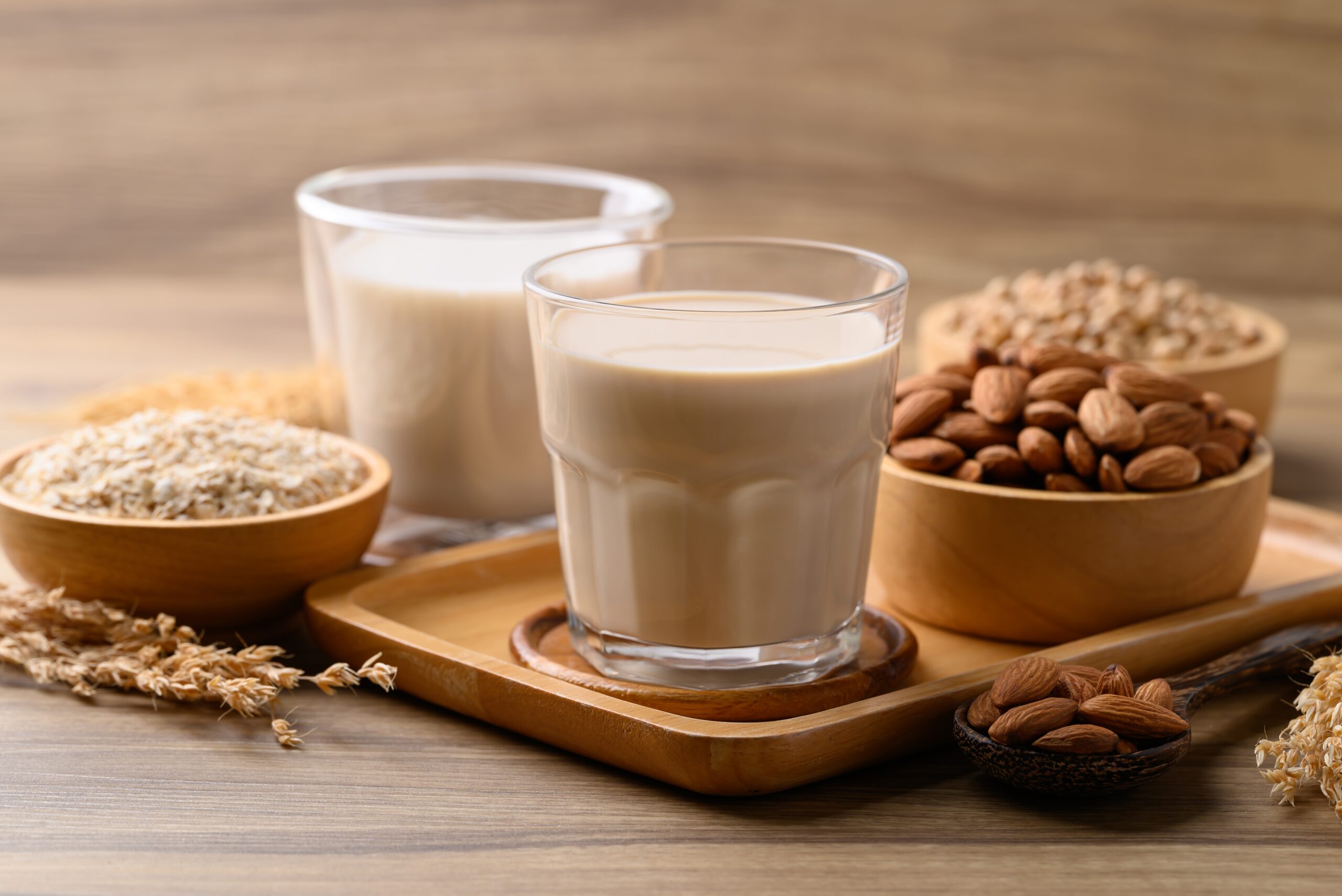
From oat milk in your coffee, almond milk in a smoothie, and coconut yogurt at breakfast, non-dairy options have become everyday choices. Whether you avoid dairy because of an allergy, personal preference, a vegan eating pattern, or because you’re looking for an option that fits your calorie goals, there are more ways than ever to make those swaps. But do the alternatives provide the same nutrition, or could some swaps leave you short on important nutrients?
A new study takes a closer look at what happens to your nutrient intake when dairy is replaced with plant-based alternatives. It suggests these swaps can leave you missing essential nutrients, especially if you’re already getting too little iodine, calcium, vitamin B2, or vitamin B12.
That doesn’t mean you need to give up your favorite non-dairy milk, cheese, or yogurt. It’s a reason to look a little closer at what your favorite swaps provide and where you might need another source of nutrients.
To help break down the findings and what they can mean for your health, we spoke with Maggie Hudspeth, a Registered Dietitian Nutritionist and Senior Manager of Noom Coaching. She weighs in on what this study means for you, where it makes sense to make small changes, and whether it’s worth changing your diet based on the results.
What’s the big deal about the new dairy-free diet study?
A September 2026 study is making waves online because it taps into a popular trend: non-dairy foods. As more of us reach for non-dairy swaps, this study raises a question that we might not have considered: When you cut out dairy for a plant-based version, are you getting the same nutrients? Or are you actually missing out on some?
Researchers used UK National Diet and Nutrition Survey data from 3,558 people to calculate how nutrient intake could change if some or all of the milk, yogurt, and cheese people ate were replaced with an equal weight of plant-based alternatives sold in stores.
Noom’s Most Powerful Program
A dual-pathway GLP-1 and behavior change for lasting results.

The Easy Way
to lose weight and get healthy.
They focused on four nutrients dairy is a good source of: iodine, calcium, riboflavin (vitamin B2), and vitamin B12. Here’s what they do and why getting enough matters:
| Nutrient | Why your body needs it | What a deficiency can affect |
|---|---|---|
| Iodine | Makes thyroid hormones that regulate metabolism and support development. | Too little can impair thyroid hormone production; severe deficiency during pregnancy can harm a baby’s brain development. |
| Calcium | Maintains bones and teeth and supports nerves and muscles. | Long-term low intake can weaken bones and contribute to osteoporosis. |
| Riboflavin or vitamin B2 | Helps cells function and turn food into usable energy. | Deficiency can cause cracked lips, mouth sores, and skin problems; severe deficiency can cause anemia. |
| Vitamin B12 | Supports nerve cells, red blood cells, and DNA production. | Deficiency can cause anemia, fatigue, and nerve problems such as numbness or tingling. |
Dairy-free diet study: Results and what to know
The biggest finding? Replacing dairy with plant-based alternatives could lower intake of several important nutrients, particularly iodine. But the researchers also found that adding vitamins and minerals to these alternatives could help prevent those gaps from getting worse.
Replacing dairy could mean getting fewer key nutrients
Some participants weren’t getting enough nutrients even before making any swaps. For example, 54% of teenage girls ages 14 to 18 weren’t getting enough iodine or calcium from their usual diets.
When researchers modeled replacing dairy with plant-based alternatives, they found:
- Iodine intake dropped the most. Replacing 35% of dairy lowered average iodine intake by 21%. Replacing half lowered it by 28%.
- Young people and women were particularly vulnerable. When all dairy was replaced, 72% of teenage boys and 80% of teenage girls were estimated to get too little iodine.
- Calcium, vitamin B2, and vitamin B12 intake also declined. More people were estimated to fall short of their needs when half or all of their dairy was replaced, depending on the nutrient and age group.
Importantly, getting less of a nutrient doesn’t necessarily mean you’re getting too little. The risk depends on what you’re already eating and which products you choose.
Fortified dairy alternatives helped close nutrient gaps
The researchers also modeled what would happen if dairy alternatives contained added iodine, calcium, vitamin B2, and vitamin B12.
Fortification helped maintain intake of most of these nutrients at levels similar to participants’ original diets. But it couldn’t fix gaps that were already there.
“Choosing a fortified alternative can help replace nutrients you used to get from dairy,” says Hudspeth. “But if you weren’t getting enough to begin with, you may need other foods or a supplement to close that gap.”
The researchers also looked at adding iodine to bread through iodized salt. Combining this with fortified dairy alternatives produced the biggest improvement. Even when all dairy was replaced, the proportion of teenage girls estimated to get too little iodine dropped to 43%, compared with 54% in their original diets.
“This model shows how adding nutrients to everyday foods could help, although it didn’t eliminate every gap,” says Hudspeth. “Your overall dietary intake of all foods and drinks matters to know what you’re getting from everything you eat. In general, one food or drink doesn’t make or break whether you have a deficiency unless you’re not eating other foods with diverse nutrients.”
Noom’s Most Powerful Program
A dual-pathway GLP-1 and behavior change for lasting results.
The Easy Way
to lose weight and get healthy.
The study predicted nutrient gaps, not actual deficiencies
There’s an important limitation: This was a modeling study. Researchers calculated how replacing dairy might change nutrient intake. They didn’t have people change their diets or test whether they developed deficiencies.
“Getting too little of a nutrient and having a diagnosed deficiency aren’t the same thing. For example, the estimate that 80% of teenage girls would get too little iodine after all dairy was replaced doesn’t mean 80% developed an iodine deficiency,” explains Hudspeth. “Obviously, we want to get ahead of any potential deficiencies, but every person’s health is different. Any personal concerns should be brought up with a professional who knows your health history and can look at your daily diet.”
The takeaway: You don’t necessarily need to avoid dairy alternatives. What matters is choosing products that provide the nutrients you need and getting anything they’re missing from other foods.
How do the UK findings apply to people in the U.S.?
This study looked at UK diets and products, so the findings may not apply exactly to people in the U.S. Plant-based alternatives can contain different amounts of added vitamins and minerals depending on where they’re sold. Here are a few important differences:
- Iodized salt is more accessible in the U.S. It’s not widely available in the UK. In the U.S., iodized table salt is common, but adding iodine isn’t required, so not all salt provides it.
- Both countries recognize potential nutrient gaps. UK scientific advisers recommend fortifying plant-based drinks with calcium, iodine, B2, B12, and vitamin A. In the U.S., the FDA recommends comparing nutrition labels because nutrient content varies by product.
- U.S. standards don’t always include iodine. USDA standards for milk substitutes include calcium, B2, and B12, but not iodine. These standards also don’t apply to every plant-based beverage sold in stores.
What does this mean for you? You don’t need to avoid dairy alternatives, but it’s worth checking the labels of products you use regularly, particularly for iodine, which isn’t always added even when other nutrients are.
What can you do if you choose non-dairy foods?
So what does this mean for your morning coffee or favorite dairy-free yogurt? Start with the products you use most often. A splash of oat milk in coffee plays a different role in your diet than several servings of non-dairy milk, yogurt, and cheese every day. Take a look at what those regular choices give you and where you might need another source of nutrients.
“This study doesn’t mean you have to stop eating all non-dairy foods. Start by looking at what you use every day and which nutrients those foods are actually giving you,” says Hudspeth.
You don’t need one food to do it all. You can get these vitamins and minerals from a mix of foods that fit your preferences and needs. Here are a few places to start:
- Calcium: Calcium-set tofu, fortified beverages, kale, and bok choy can contribute. Check tofu and beverage labels because amounts vary.
- Vitamin B12: Fortified cereals, fortified nutritional yeast, or an appropriate supplement can help cover needs on a vegan diet. Unfortified plant foods don’t provide a reliable source.
- Riboflavin: Fortified cereals and grain products, mushrooms, and spinach can contribute. Eggs are another option if you eat them.
- Iodine: Iodized salt, fish, seafood, and eggs can contribute, depending on your eating pattern. If you use salt, choosing an iodized version can help; this isn’t a reason to add more salt. Sea salt and Himalayan salt often aren’t iodized.
“A registered dietitian or primary care provider can help you look at what you eat in a typical week, identify any gaps, and find options that fit your preferences. If you’re pregnant, planning a pregnancy, feeding a young child, or avoiding several food groups, it’s especially helpful to make a plan with a professional.”
Frequently asked questions about going dairy-free and dairy-free swaps
Is a non-dairy diet good for you?
Yes, it can fit a healthy eating pattern, as long as you have other ways to get the nutrients dairy used to provide. Whether it works well for you comes down to what else you eat, your preferences, and any allergies or health needs. Going dairy-free doesn’t automatically make your diet healthier, and this study didn’t measure the overall health effects of cutting out dairy.
You can use non-dairy foods without following a fully vegan diet. If you’re comparing options, our guide to oat milk versus almond milk explains how they can fit different preferences; use the label on your own product to check its nutrition.
Why is everyone ditching oatmilk?
If you’ve seen people questioning oat milk, much of the discussion comes down to its nutrition: It has more carbohydrates than some alternatives, some versions have added sugar, and it usually has less protein than dairy or soy milk.
If you enjoy oat milk, compare fortification, protein, and added sugar. You can keep it in your routine while getting nutrients elsewhere. This study examined several dairy alternatives rather than establishing a health risk specific to oats.
How can vegans get enough iodine?
If you eat a vegan diet, it helps to have a dependable iodine source in your routine. Iodized salt can contribute—use it in place of the salt you already use, rather than adding more. You can also look for plant-based milks or other foods with added iodine. Check the label: Added calcium or B12 doesn’t mean a product also contains iodine.
Do I need supplements if I don’t eat dairy?
Not necessarily—it depends on what else you eat. If you follow a vegan diet, for example, you need a reliable source of B12 from fortified foods or supplements. Iodine may also need attention when dairy, eggs, and seafood are absent. A clinician or dietitian can review your usual intake and help select a supplement when needed.
Noom’s Most Powerful Program
A dual-pathway GLP-1 and behavior change for lasting results.
Noom’s Most Powerful Program
A dual-pathway GLP-1 and behavior change for lasting results.
The bottom line: The new dairy free diet study doesn’t mean you have to avoid all non-dairy products
You can keep the oat milk latte. What this new UK study asks us to consider is what happens to the nutrients dairy used to provide when we make a swap. The researchers estimated that people could get less iodine, calcium, B2, and B12 when plant-based alternatives didn’t provide comparable amounts. They also found that adding nutrients to alternatives helped prevent further drops, while adding iodine to both alternatives and bread improved iodine intake.
You can keep non-dairy milk, yogurt, and cheese in your routine. Start with the products you use most, check what they provide, and build in other sources of iodine, calcium, B2, and B12 where needed. Ask for tailored advice if you’re pregnant, planning a pregnancy, feeding a young child, or avoiding several food groups.
If you’re working toward health or weight goals, Noom can help you build awareness of your food choices and develop habits that fit your life. Small, informed changes can make your eating pattern work better for you.
Editorial standards
At Noom, we’re committed to providing health information that’s grounded in reliable science and expert review. Our content is created with the support of qualified professionals and based on well-established research from trusted medical and scientific organizations. Learn more about the experts behind our content on our Health Expert Team page.