Eggplant has become a popular choice for weight loss and low-carb eating, and it’s easy to see why. A cup of cubed raw eggplant has only about 20 calories and 5 grams of carbohydrates, and it’s roughly 92% water. Its mild flavor and meaty texture also make it easy to use in place of higher-carb ingredients. In healthier and low-carb recipes, you’ll see eggplant slices replacing lasagna noodles and burger buns, roasted rounds turned into mini pizza crusts, and thin strips served in place of pasta.
But eggplant has one catch: It readily soaks up whatever you cook it with. That means a vegetable that starts with very few calories can absorb a significant amount of oil during frying or sautéing. And despite its hearty texture, eggplant isn’t particularly high in protein or fiber, so what you pair it with matters, too.
So, is eggplant actually good for weight loss? Yes—but there’s more to consider than its calorie count. We’ll break down eggplant’s nutrition, potential health benefits, how it fits into different eating patterns, and what the research says about weight loss, blood sugar, cholesterol, antioxidants, and more. Plus, we’ll look at the best ways to prepare it if you’re trying to lose weight without turning a naturally low-calorie vegetable into a much higher-calorie meal.
✅ Quick answer: Is eggplant good for weight loss?
- Yes. Eggplant has only about 20 calories per cup and is roughly 92% water, so it can add plenty of volume to meals for very few calories. The catch is that its spongy flesh readily absorbs oil, which can quickly increase the calories. Roast, grill, or air-fry it with a measured amount of oil and pair it with protein for a more filling, balanced meal.
🚀 Weight-loss benefits of eggplant
- Eggplant is low in calories for the amount of food – Water makes up about 92% of eggplant, so a cup of raw cubes has only about 20 calories. Foods with a low calorie density give you a larger volume of food for fewer calories, which can make it easier to build satisfying meals while staying within your calorie needs. Research suggests that lowering the calorie density of your diet can help reduce overall calorie intake.
- It can replace more calorie-dense ingredients – Eggplant’s size and texture make it particularly useful as a swap for foods that pack more calories into the same amount of food. Eggplant slices can stand in for lasagna noodles, pizza crust, or a burger bun, while roasted or grilled eggplant can add bulk to pasta dishes, grain bowls, and casseroles. Whether the swap actually saves calories depends on what you add to it, but eggplant gives you a very low-calorie starting point.
- It can make lighter meals feel more substantial – Eggplant has a soft, meaty texture that works well in dishes where you might otherwise rely on larger amounts of meat, cheese, pasta, or other calorie-dense ingredients. Pair it with a good source of protein and other vegetables, and you can build a large, satisfying meal without relying on eggplant itself to provide much protein or fiber.
⚠️ Things to be mindful of when eating eggplant
- It can absorb a lot of cooking fat – Eggplant’s spongy flesh readily absorbs oil during cooking, especially when it’s fried. In a 2023 lab study of deep-fried eggplant rings, the amount of absorbed oil increased the longer the eggplant was fried. Since just 1 tablespoon of oil has about 120 calories, how you cook eggplant can have a much bigger impact on calories than the vegetable itself. Roasting, grilling, or air-frying with a measured amount of oil can help keep calories in check.
- It’s low in protein – A cup of eggplant has only about 1 gram of protein. Since protein can help with fullness and maintaining muscle during weight loss, pair eggplant with a protein source such as beans, eggs, fish, tofu, Greek yogurt, or cottage cheese to make a more satisfying meal.
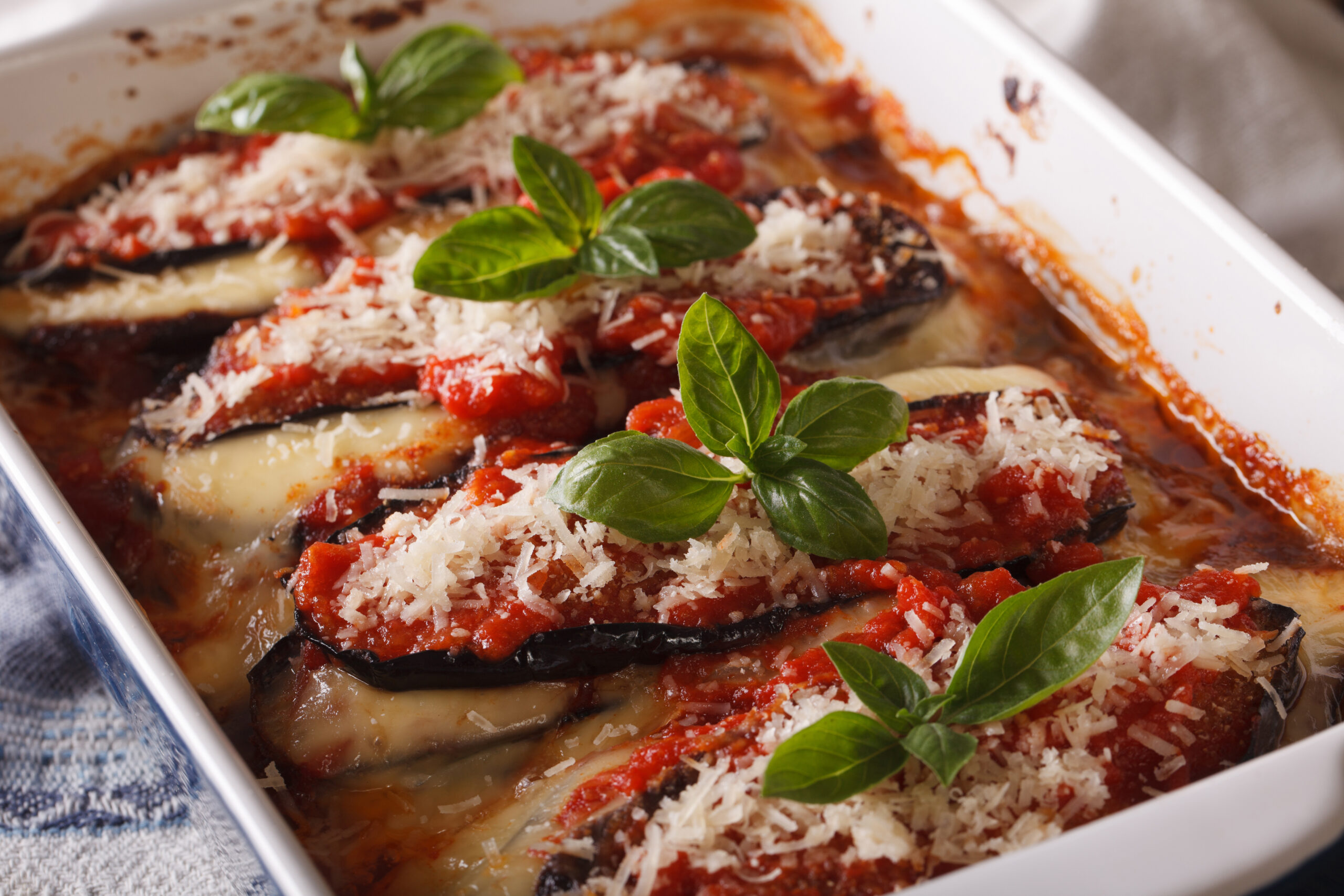
- The rest of the dish matters – Eggplant itself is very low in calories, but it’s rarely eaten plain. In dishes like eggplant Parmesan and moussaka, breading, cheese, oil, and rich sauces can add far more calories than the eggplant. If weight loss is your goal, look at the whole dish rather than assuming an eggplant-based meal is automatically low in calories.
🥗 Eggplant: Nutrition facts (per 1 cup, cubed, raw – about 82 grams)
| Nutrient | Amount | % RDA* |
|---|---|---|
| Calories | 20 calories | 1% |
| Protein | 0.8 g | 2% |
| Total carbs | 4.8 g | 2% |
| Fiber | 2.5 g | 9% |
| Sugars | 2.9 g | — |
| Total fat | 0.15 g | <1% |
| – Saturated fat | 0.03 g | <1% |
| – Monounsaturated fat | 0.01 g | — |
| – Polyunsaturated fat | 0.06 g | — |
| Omega-3 | 0.01 g | — |
| Omega-6 | 0.05 g | — |
*Recommended dietary allowance (RDA) is defined as the average daily amount of nutrients needed to meet the requirements of nearly all healthy people in a specific group.
A cup of raw eggplant is mostly water, which explains why you get a fairly large portion for just 20 calories. It provides some fiber, but very little protein or fat, so eggplant is better thought of as a low-calorie base for a meal than a filling meal on its own. Pairing it with protein—like chicken, fish, beans, tofu, eggs, or cottage cheese—can make it more satisfying.

The Easy Way
to lose weight and get healthy.
The bigger nutritional variable is how you cook it. Eggplant’s spongy flesh readily absorbs oil, so a dish that starts with a 20-calorie cup of eggplant can become much more calorie-dense during frying or sautéing. If weight loss is your goal, roasting, grilling, or air-frying with a measured amount of oil lets you take advantage of eggplant’s naturally low calorie density without adding substantially more calories in the cooking process.
💊 Eggplant: Vitamins & minerals (per 1 cup, cubed, raw – about 82 grams)
| Vitamin/Mineral | Amount | % RDA* |
|---|---|---|
| Manganese | 0.19 mg | 8% |
| Copper | 0.07 mg | 7% |
| Folate | 18 µg DFE | 5% |
| Pantothenic acid (B5) | 0.23 mg | 5% |
| Vitamin B6 | 0.07 mg | 4% |
| Potassium | 188 mg | 4% |
| Niacin (B3) | 0.53 mg | 3% |
| Magnesium | 12 mg | 3% |
| Thiamin (B1) | 0.03 mg | 3% |
Eggplant provides small amounts of several vitamins and minerals rather than being an especially rich source of any one. Manganese and copper top the list, while folate, vitamin B6, potassium, magnesium, and several other B vitamins contribute smaller amounts.
The purple skin may be more nutritionally interesting. It contains anthocyanins, the same family of antioxidant plant compounds that give foods like blueberries and red cabbage their color. One of the main anthocyanins in eggplant skin is nasunin, which has been studied for its antioxidant activity. That’s one reason to leave the skin on when you enjoy purple varieties.
The bigger picture: You don’t need to eat eggplant for a particular vitamin or mineral. Its strength is that it adds volume, texture, and some fiber and micronutrients to a meal for very few calories. Pairing it with other colorful vegetables and a source of protein makes it part of a more nutritionally complete meal.
🔍 Nutrient breakdown
Glycemic index (GI) of eggplant
Glycemic index: about 15 to 20 (Low)
Eggplant is very low in digestible carbohydrates, with about 5 grams of total carbohydrates and 2.5 grams of fiber per cup. That means it’s unlikely to have a large effect on blood sugar on its own.
💡 Tip: The rest of the meal matters more. Breading, sweet sauces, pasta, rice, and other carbohydrate-rich foods served with eggplant can have a much greater effect on blood sugar.
Is eggplant high in protein?
❌ No: Eggplant has less than 1 gram of protein per cup, so it isn’t a significant protein source. Pairing it with protein can make an eggplant-based meal more filling and nutritionally balanced.
Is eggplant high in fiber?
➖ It provides some: A cup of raw eggplant has about 2.5 grams of fiber, or roughly 9% of the RDA. That makes it a useful contributor to your daily fiber intake, but not an especially high-fiber food on its own.
💡 Tip: Keep the edible skin on and combine eggplant with higher-fiber foods such as beans, lentils, or whole grains to add more fiber to the meal.
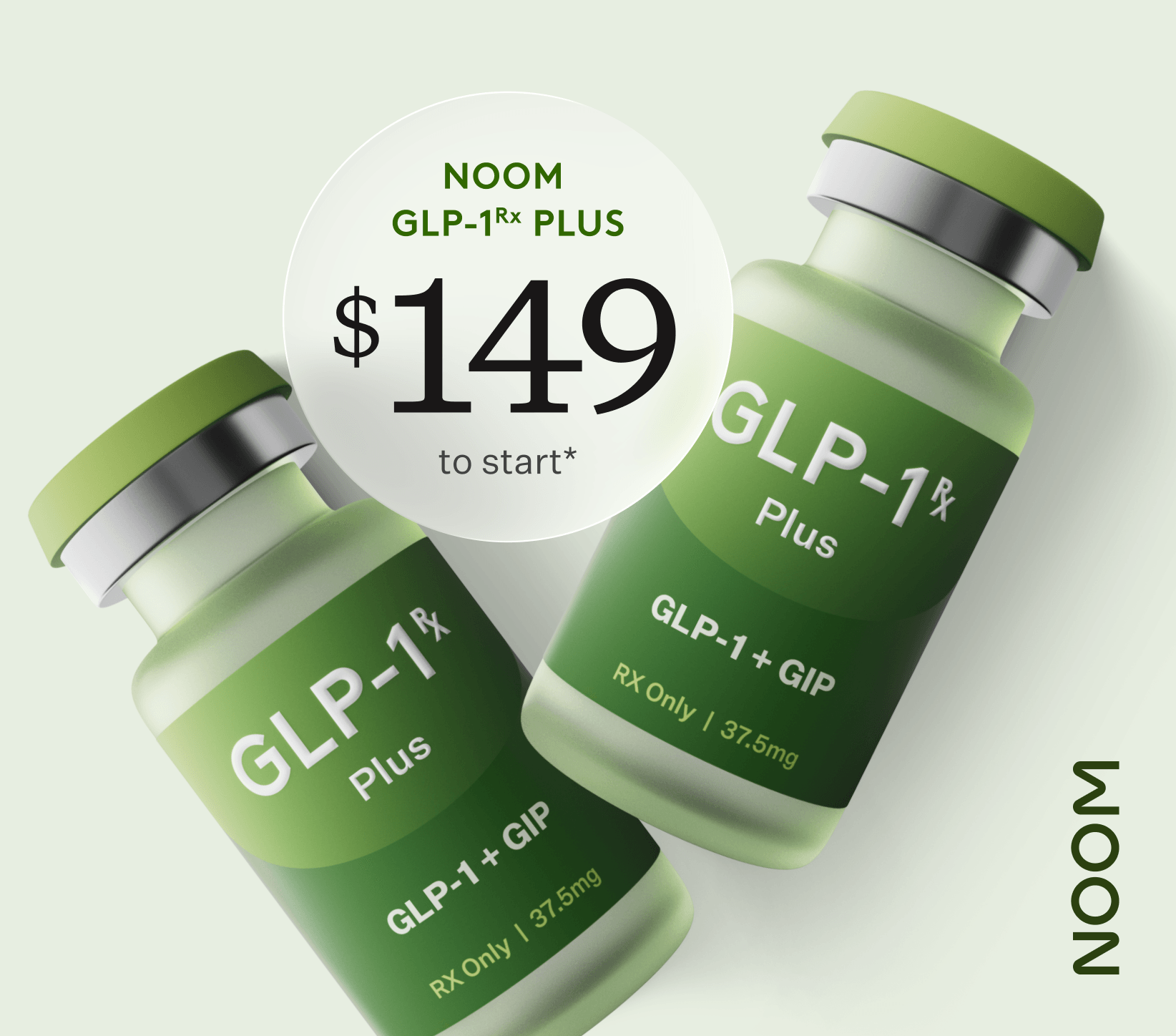
Noom’s Most Powerful Program
A dual-pathway GLP-1 and behavior change for lasting results.
Is eggplant low in carbs?
✔️ Yes: A cup of raw eggplant has only about 5 grams of carbohydrates, including 2.5 grams of fiber. That makes it a relatively low-carb way to add volume to a meal.
💡 Tip: Eggplant can replace higher-carb ingredients in some dishes. Try grilled slices in place of lasagna noodles or use roasted eggplant as the base for toppings you’d normally put on bread or pizza crust.
Is eggplant gluten-free?
✔️ Yes: Plain eggplant is naturally gluten-free. The catch is how it’s prepared: Bread crumbs, tempura batter, and some sauces can contain gluten.
💡 Tip: If you have celiac disease or need to avoid gluten, check the ingredients in breaded eggplant, restaurant dishes, dips, marinades, and sauces rather than assuming an eggplant dish is gluten-free.
Is eggplant good for fat loss?
✔️ It can be: No individual food causes fat loss, but eggplant can fit well into a weight-loss diet because it provides a lot of volume for very few calories. One cup of raw eggplant has only about 20 calories, so it can help bulk up meals without adding many calories.
💡 Tip: Preparation makes the biggest difference. Roasting, grilling, or air-frying eggplant with a measured amount of oil keeps its calorie density much lower than deep-frying or cooking it with large amounts of oil.
🍽️ Diet compatibility: Which diets include eggplant?
| Diet | ✅ / ❌ | Why |
|---|---|---|
| Keto | ✅ | With about 5 grams of total carbs and 2.5 grams of fiber per cup, eggplant can fit into a low-carb or keto eating pattern. Choose grilled, roasted, or air-fried versions over breaded preparations, which add carbohydrates. |
| Paleo | ✅ | Eggplant is a whole plant food that fits most paleo eating patterns. One exception is the stricter autoimmune protocol (AIP), which excludes nightshade vegetables such as eggplant. |
| Mediterranean | ✅ | Eggplant fits naturally into a Mediterranean-style diet and appears in dishes such as ratatouille, moussaka, and baba ganoush. Pair it with vegetables, beans, whole grains, fish, or other Mediterranean staples for a balanced meal. |
| Vegan | ✅ | Eggplant itself is vegan and its meaty texture makes it useful in plant-based meals. Check prepared dishes such as eggplant Parmesan and moussaka, which may contain cheese, eggs, or meat. |
| Gluten-free | ✅ | Plain eggplant is naturally gluten-free. Breaded eggplant, tempura, and some sauces can contain gluten, so check ingredients when buying prepared foods or ordering at a restaurant. |
Eggplant fits easily into many eating patterns, but preparation matters. Breading can add carbohydrates and gluten, cheese or egg can make a dish unsuitable for a vegan diet, and generous amounts of oil can substantially increase calories. For weight loss, grilling, roasting, or air-frying with a measured amount of oil keeps eggplant’s naturally low calorie density working in your favor.
🌟 Is eggplant healthy? The health benefits of eggplant
Metabolic health: Is eggplant good for your metabolism?
- Boosts metabolism? ❌ No – There’s no evidence that eggplant meaningfully boosts your metabolism. Your body does use energy to digest food—a process called the thermic effect of food—but protein requires the most energy to digest. Eggplant has less than 1 gram of protein per cup, so any effect on calorie burning would be minimal.
- Improves insulin sensitivity? ⚠️ Maybe – Eggplant is naturally low in carbohydrates and provides some fiber, so it can fit well into a blood-sugar-friendly eating pattern. Lab studies have also found that compounds in eggplant may inhibit enzymes involved in carbohydrate digestion, but there isn’t enough research in people to show that eating eggplant improves insulin sensitivity.
- Effect on fat storage? ➖ Neutral – Eggplant doesn’t directly prevent or promote fat storage. Over time, changes in body fat depend largely on overall energy balance. Where eggplant can help is calorie density: A cup of raw eggplant has only about 20 calories, so grilled, roasted, or air-fried eggplant can add a lot of food to a meal for relatively few calories. Frying, breading, or adding generous amounts of oil can substantially increase that calorie count.
Cholesterol impact: Does eggplant affect cholesterol levels?
- Does it lower LDL (bad) cholesterol? ⚠️ Unclear – There isn’t strong evidence that eating eggplant lowers LDL cholesterol. In a five-week trial of 38 people with high cholesterol, an eggplant drink produced a modest effect that faded over time and was similar to the effect of standard dietary advice. In another six-week trial of 21 adults, eggplant extract with orange juice didn’t significantly lower LDL cholesterol.
- Does it raise HDL (good) cholesterol? ❌ Not shown – Research hasn’t found a meaningful effect of eggplant on HDL cholesterol. HDL didn’t significantly change in the six-week trial, and a 2021 review of clinical and animal research concluded that evidence for eggplant improving cholesterol and other blood fats remains limited.
- Overall impact on heart health? ✅ Heart-healthy choice – Eggplant is naturally very low in saturated fat and provides some fiber and potassium, a mineral that helps support healthy blood pressure. Its biggest advantage may be what it replaces: Using roasted or grilled eggplant in place of foods higher in saturated fat or calories can make the overall meal more heart-friendly.
💡 Tip: Roast or grill eggplant with a measured amount of olive oil and pair it with beans or lentils for additional fiber and plant protein.
Can you eat eggplant in a calorie deficit?
✔️ Yes – A calorie deficit means taking in fewer calories than your body uses over time. With only about 20 calories per cup, eggplant can add a lot of volume to a meal without using much of your calorie budget. Cooking method matters, though: Just 1 tablespoon of oil adds about 120 calories.
💡 Tip: Measure oil before cooking, or use a pastry brush or spray to distribute a small amount evenly over eggplant slices.
Is eggplant rich in antioxidants?
✔️ Yes – Purple and black eggplant skins contain anthocyanins, antioxidant plant pigments that include nasunin. Eggplant also contains chlorogenic acid, another antioxidant compound. Research comparing different varieties suggests darker eggplants and their peels can contain higher concentrations of some of these compounds than lighter varieties or the flesh alone.
💡 Tip: Keep the edible skin on purple eggplant to get more of its antioxidant plant compounds.
Does eggplant support gut health?
⚠️ Possibly – Eggplant provides fiber and plant compounds that may interact with bacteria in the gut. Laboratory digestion studies suggest that cooking can affect how much of these compounds remains available, but there isn’t enough research in people to show that eating eggplant has a specific effect on the gut microbiome.
Does eggplant support digestion?
✔️ It can – Eggplant provides about 2.5 grams of fiber per cup, which contributes to the fiber your digestive system needs for regular bowel movements. But eggplant isn’t an especially high-fiber food, and suddenly increasing fiber can cause gas or bloating in some people.
💡 Tip: If you’re trying to increase your fiber intake, combine eggplant with higher-fiber foods such as beans, lentils, or whole grains and increase your intake gradually.
Does eggplant help you feel satiated and less hungry?
➖ Somewhat – Eggplant’s high water content and low calorie density can add volume to a meal, but it contains very little protein and only a modest amount of fiber—two nutrients associated with fullness. It will generally make a more satisfying meal when paired with a good source of protein and additional fiber.
Satiety level: Medium
💡 Tip: Stir roasted eggplant into a lentil or chickpea stew, or pair it with fish, chicken, tofu, cottage cheese, or Greek yogurt.
Does eggplant help with nighttime cravings?
⚠️ Not specifically – There’s no evidence that eggplant reduces nighttime cravings. But if you want something savory in the evening, roasted or air-fried eggplant can be a lower-calorie alternative to some fried or snack foods.
💡 Tip: Slice it thinly, lightly coat it with oil, season it with smoked paprika or garlic, and roast or air-fry until browned.
Access GLP-1 Weight Loss with Noom
Explore a wide range of prescription medications supported by Noom’s program.
Microdose GLP-1rx
Noom GLP-1rx
Noom GLP-1rx Plus
Wegovy®
Ozempic®

Metformin
Zepbound®
Mounjaro®
Liraglutide
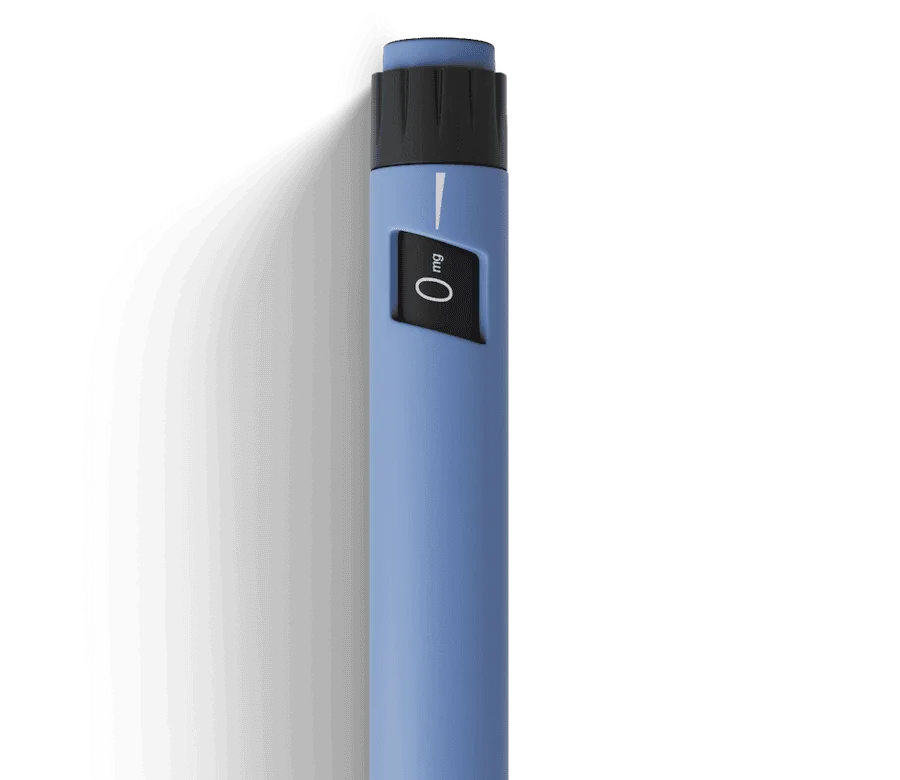
Does eggplant help reduce inflammation?
⚠️ Limited evidence – Eggplant contains anthocyanins, chlorogenic acid, and other plant compounds that have demonstrated antioxidant and anti-inflammatory activity in laboratory and animal research. But there isn’t enough research in people to conclude that eating eggplant meaningfully reduces inflammation.
Is eggplant beneficial for brain health?
⚠️ Not proven – Nasunin and other compounds in eggplant have antioxidant activity, but there isn’t evidence from human studies showing that eating eggplant improves memory or protects against cognitive decline. The stronger evidence supports eating an overall dietary pattern rich in a variety of fruits and vegetables.
Can eggplant improve skin and hair health?
⚠️ Not specifically – Eggplant provides small amounts of nutrients involved in normal skin and hair function, including copper, but there’s no evidence that eating eggplant produces noticeable changes in either. Its nutrients can contribute to an overall balanced diet, but it isn’t a particularly concentrated source of nutrients associated with skin or hair health.
Can eggplant help balance hormones?
❌ Not proven – There’s no good evidence that eggplant “balances” hormones. Although its fiber, vitamins, minerals, and plant compounds can contribute to a nutritious diet, eggplant hasn’t been shown to meaningfully alter levels of insulin, estrogen, thyroid hormones, or other hormones.
💡 Tip: If you’re concerned about a hormonal condition or symptoms you think may be hormone-related, talk with your clinician rather than relying on a particular food to correct them.
🍽️ Best ways to eat eggplant for weight loss
Eggplant is typically most weight-loss-friendly when it’s roasted, grilled, or air-fried with a measured amount of oil and paired with protein. Its mild flavor and sturdy texture also make it easy to use in place of more calorie-dense ingredients—which is behind many of the eggplant swaps showing up in healthier recipes.
- Turn it into a pizza base – Thick roasted or air-fried eggplant rounds can replace pizza dough, then be topped with marinara, mozzarella, vegetables, and a protein. The eggplant itself adds very few calories, but cheese and oil can add up quickly, so toppings still matter.
- Use it in place of pasta or bread – Grilled eggplant planks can stand in for lasagna noodles or burger buns, while thin strips can be roasted or sautéed and served like noodles. These swaps typically reduce the calories and carbohydrates in the dish while adding more vegetables.
- Make a higher-protein eggplant Parmesan boat – Roasted eggplant halves can be filled with marinara and a higher-protein cheese such as cottage cheese or ricotta, then topped with a smaller amount of mozzarella or Parmesan. You get the flavors of eggplant Parmesan without necessarily needing the breading and frying.
- Air-fry it for fries or crispy bites – Eggplant sticks or slices can be air-fried with a light coating instead of submerged in oil. Pair them with a Greek yogurt-based dip or another protein-rich sauce to make them more satisfying.
- Be mindful of the oil – Eggplant readily absorbs cooking fat, so roasting, grilling, or air-frying doesn’t automatically make a dish low in calories. Measuring rather than freely pouring the oil helps preserve the calorie advantage you started with.
Frequently asked questions about eggplant and weight loss
How many calories are in eggplant?
A cup of cubed raw eggplant (about 82 grams) has about 20 calories, while 100 grams has about 25 calories. Cooked eggplant is still naturally low in calories, but the total depends on how it’s prepared. Oil makes the biggest difference: Each tablespoon adds about 120 calories, and eggplant can absorb quite a bit of it during cooking.
Can you eat eggplant every day?
Yes, most people can eat eggplant every day. But eating a variety of vegetables helps you get a wider range of nutrients, so consider rotating eggplant with options like zucchini, mushrooms, and broccoli. If you notice mouth itching, hives, or digestive discomfort after eating eggplant, talk with a health care provider, since allergies and sensitivities can occur.
Is eggplant parmesan good for weight loss?
Eggplant parmesan can fit into a weight-loss plan, but its calorie count depends largely on how it’s prepared. Breaded and fried eggplant absorbs oil, while cheese adds additional calories. Baking or grilling unbreaded slices and using a lighter layer of cheese can make eggplant parmesan a lower-calorie option while keeping the flavors that make the dish satisfying.
Is eggplant good for diabetes and blood sugar?
Eggplant is a non-starchy vegetable with about 5 grams of carbohydrates per cup. It’s also low in calories and contains fiber, making it an option that can fit into a blood-sugar-friendly eating pattern. Keep in mind that breading, sweet sauces, and sides like rice or pasta can change how the overall meal affects blood sugar. If you take diabetes medication, talk with your health care provider or a dietitian about how to fit eggplant into your meals.
Is eggplant a nightshade, and should I avoid it?
Yes, eggplant belongs to the nightshade family, along with tomatoes, potatoes, and peppers. Research hasn’t shown that nightshades cause inflammation in most people, so there’s generally no reason to avoid eggplant unless it bothers you. Some people report symptoms like mouth itching or stomach upset, and certain eating plans, including the autoimmune protocol, exclude nightshades. If you suspect eggplant triggers symptoms for you, track how you feel after eating it and talk with a health care provider.
Can eggplant replace pasta or meat?
Eggplant can replace part of either, depending on the dish. Grilled or roasted slices can stand in for lasagna noodles, while diced eggplant can replace some of the ground meat in sauces, chili, or other dishes to add volume for relatively few calories. Eggplant isn’t a significant source of protein, though—a cup has about 1 gram—so pair it with beans, lentils, tofu, or another protein source to make the meal more balanced.
🧠 The bottom line: Eggplant is a smart choice for weight loss
Eggplant is a low-calorie, water-rich vegetable that adds volume and fiber to meals, making it a practical way to eat fewer calories without shrinking your portions. At about 20 calories per cup of cubes, even a 2- to 3-cup portion has only about 40 to 60 calories before adding cooking fat. Research on fruits and vegetables supports this approach when it’s combined with an overall reduction in calories. Simply adding more vegetables without changing anything else, however, hasn’t been shown to cause weight loss on its own.
Roasting, grilling, or air-frying eggplant with a small amount of oil keeps calories relatively low, while deep-frying and breading can add significantly more. Pair eggplant with a source of protein, such as beans, eggs, fish, tofu, or Greek yogurt, since eggplant itself provides only about 1 gram of protein per cup.
Sustainable weight loss comes from an overall pattern of meals you can stick with, not from any single vegetable. Eggplant can fit easily into that pattern, whether you eat gluten-free, vegan, keto, Mediterranean-style, or simply want a filling, versatile vegetable that works in a calorie deficit.
The Easy Way
to lose weight and get healthy.
📖 Scientific evidence
- Eggplant skin contains an antioxidant called nasunin. (Toxicology, 2000) Lab research found that nasunin, the purple pigment in eggplant skin, has antioxidant activity. Human studies are still needed to determine whether it provides specific health benefits.
- Eggplant hasn’t been shown to significantly lower cholesterol on its own. (Brazilian Journal of Medical and Biological Research, 2000) In a small study of 38 people with high cholesterol, an eggplant preparation had modest, temporary effects but didn’t significantly outperform a placebo.
- Deep-frying can add a lot of oil to eggplant. (Food Science & Nutrition, 2023) Research on deep-fried eggplant found that it absorbed substantial amounts of oil, with frying time and temperature affecting oil uptake. That makes cooking method especially important when you’re trying to keep calories lower.
- Adding more produce alone doesn’t cause weight loss. (The American Journal of Clinical Nutrition, 2014) A review of randomized trials found that simply eating more fruits and vegetables didn’t lead to weight loss. Eggplant is more useful when it replaces higher-calorie foods rather than simply being added to your diet.
Editorial standards
At Noom, we’re committed to providing health information that’s grounded in reliable science and expert review. Our content is created with the support of qualified professionals and based on well-established research from trusted medical and scientific organizations. Learn more about the experts behind our content on our Health Expert Team page.