What you’ll learn:
- Walking backwards may challenge your balance, strengthen your legs, and use more energy than walking forward at the same speed, but the research is still limited.
- The strongest evidence for walking backwards is in knee rehabilitation rather than for healthy adults looking for a better workout.
- Walking backwards may burn more calories at the same pace, but it hasn’t been shown to lead to greater weight loss than regular walking.
Walking seems like one of the simplest exercises there is. Put one foot in front of the other, repeat. But social media has a way of turning even basic movement into a trend. We’ve seen Japanese walking, lymphatic walking, and now a trend that takes walking in a completely different direction—literally.
People are filming themselves walking backwards on treadmills, tracks, and sidewalks and sharing it as a fitness tip. Often called “retro walking,” the trend comes with claims that walking backwards can do more for your knees, balance, strength, and weight loss than walking forward.
Those claims aren’t coming out of nowhere. Walking backwards has been used in rehabilitation and studied for its potential effects on knee pain and function, as well as balance and mobility. But much of that research has been done in people with knee osteoarthritis or other health conditions, which makes it important to separate what studies have actually found from what gets repeated online.
So, what are the benefits of walking backwards? Here’s what the research says about retro walking and its effects on your knees, balance, strength, and calorie burn—and how to try it safely. Plus, we ask Maggie Hudspeth, RDN, Noom’s Senior Manager of Coaching, to weigh in on the trend.
Why are people walking backwards?
Walking backwards, also called retro walking, is exactly what it sounds like: walking in reverse rather than forward. It isn’t a new exercise or something invented on social media. Backward walking has been studied for decades and used as part of rehabilitation programs, particularly for lower-body conditions.
Noom’s Most Powerful Program
A dual-pathway GLP-1 and behavior change for lasting results.

What is new is its popularity as a general fitness trend. On TikTok and Instagram, people are walking backwards on treadmills, tracks, and sidewalks, often for a few minutes at a time. You’ll see it presented as a way to strengthen your legs, improve balance, support your knees, or make an ordinary walk more challenging.
There are reasons walking backwards has a place in rehabilitation. Moving in reverse changes the mechanics of walking and how the muscles of the legs are used. Research has explored it as a way to maintain cardiovascular fitness while potentially reducing stress on the knee, strengthen the muscles around the knee, and challenge balance and coordination. Studies have found some of the clearest benefits when backward walking is added to conventional physical therapy for people with knee osteoarthritis.
That rehab history helps explain why retro walking has made the jump to social media. But using walking backwards as part of physical therapy isn’t quite the same as adding a few minutes to your workout because you saw it online.
“Walking backwards can be a useful way to challenge your muscles and balance, but context matters,” says Hudspeth. “In rehabilitation, it’s typically used for a specific reason and may be supervised by a physical therapist. That doesn’t necessarily mean everyone will see the same benefits from trying it on their own.”
How is walking backwards different from regular walking?
Walking backwards is, quite literally, regular walking in reverse. But reversing your direction changes some of the mechanics of each step. Your feet land differently, your muscles work differently, and you can’t rely as much on seeing where you’re going to guide your movement.
Here are two of the biggest differences:
- You have to rely more on balance. When you walk forward, you can see where you’re going and adjust for obstacles or changes in the ground. Walking backwards takes away much of that information, so your body has to rely more on its sense of where your feet and legs are without looking at them. A 2026 study in older adults suggests this extra challenge may be one reason walking backwards can affect balance differently from walking forward. But researchers haven’t proven that this is why balance may improve. A review of the research found that the evidence is still limited.
- Your feet land differently. When you walk forward, your heel typically hits the ground first and you roll toward your toes. When you walk backwards, you generally land closer to the front of your foot and move toward your heel. This changes how your ankles, knees, and hips move and how your legs absorb the force of each step.
Those differences help explain why researchers have studied walking backwards for potential benefits like knee function, leg strength, and balance. But research is still developing, and some of the explanations you’ll see online go beyond what studies have actually shown.
What do people claim walking backwards can do for your health?
Spend a little time looking at retro walking videos and you’ll see a surprisingly long list of potential benefits. Walking backwards is often promoted as a way to make an ordinary walk more challenging without adding speed, distance, or heavy equipment.
Some of the most common claims are that walking backwards can:
- Help with weight loss: Because moving backwards may require more energy than walking forward, it’s often promoted as a way to burn more calories and potentially make walking more effective for weight loss.
- Strengthen your legs: Walking backwards changes how your leg muscles work, particularly the muscles around your knees and thighs.
- Support knee health: This is one of the biggest claims behind the trend, with retro walking often recommended online for strengthening the knees or reducing knee pain.
- Improve balance and coordination: Since you can’t see exactly where each step will land, walking backwards requires more attention to your movement and balance.
- Improve posture: Some proponents say walking backwards encourages you to stand more upright and can counter some of the movement patterns you use while walking forward.
- Give your brain a workout: You’ll also see claims that the extra concentration required to walk backwards can benefit memory or brain health.
That’s a lot to expect from simply changing direction. “There are some interesting potential benefits to walking backwards, but it’s important not to assume that every claim you see online has the same amount of research behind it,” says Hudspeth. “Some of the evidence is promising, while other benefits still need more research.”
Access GLP-1 Weight Loss with Noom
Explore a wide range of prescription medications supported by Noom’s program.
Microdose GLP-1rx

Noom GLP-1rx

Noom GLP-1rx Plus

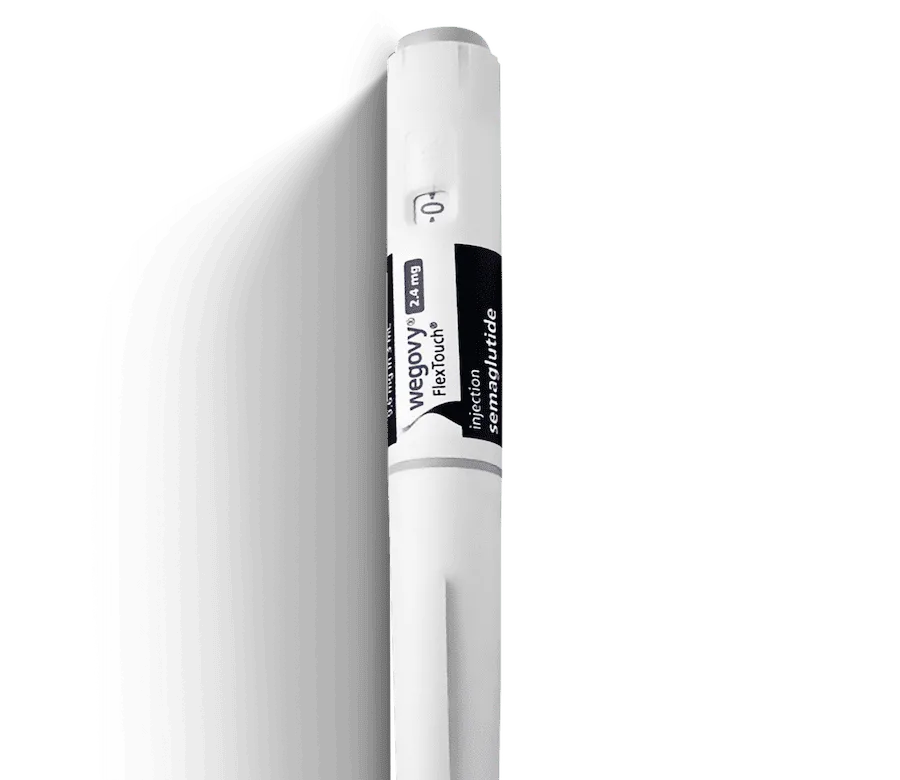
Wegovy®
Ozempic®

Metformin

Zepbound®
Mounjaro®
Liraglutide
Benefits of walking backwards: What the research says
Some of the claims around walking backwards have more evidence behind them than others. Here’s what studies suggest about the potential benefits—and where the research is still limited.
Does walking backwards burn more calories?
Walking backwards may use more energy than walking forward, which is where many of the weight-loss claims come from. But that doesn’t necessarily mean it leads to more weight loss.
- It can burn more calories at the same speed. In a study comparing forward and backward movement, researchers found that walking backwards required significantly more energy than walking forward at the same speed. Other studies have also found that walking backwards raises oxygen use and heart rate more than walking forward at a comparable pace.
- More calories per minute doesn’t necessarily mean more calories overall. You can probably walk forward faster and for longer than you can comfortably walk backwards. That means a longer regular walk could ultimately burn more calories than a short backward-walking session.
“Burning a few more calories during one type of exercise doesn’t automatically make it better for weight loss,” says Hudspeth. “What matters more is finding movement you enjoy and can do consistently. If adding a few minutes of walking backwards makes your usual walk more interesting or challenging, that can be a great reason to try it.”
Research also hasn’t shown that adding walking backwards leads to greater weight loss than regular walking. It could make a few minutes of your walk more challenging, but it isn’t a shortcut to weight loss.
Is walking backwards good for weight loss?
Not in the way most videos imply. The per-minute effort is higher, so swapping some forward-walking time for backward-walking time at a similarly sustainable effort will burn somewhat more. That’s arithmetic, not a claim about metabolism. But retro walking is usually done in short bouts of a few minutes, so the extra calories add up to a small number.
Walking itself is recommended for weight management for the reasons it always is: it burns calories and is a form of movement most people can sustain.
“If walking backwards makes your walks more interesting and helps you keep going, that consistency is worth something,” says Hudspeth. “Just don’t expect the backward part to have an effect on its own.”
Is walking backwards good for your knees?
Knee health is one of the most studied potential benefits of walking backwards, particularly in people with knee osteoarthritis.
- It may reduce pressure around the kneecap. A small study found 46% less peak force around the kneecap when participants ran backward. A later study of 20 runners found a smaller reduction of about 27%. Both studies involved running, though, so we can’t assume the same numbers apply to walking.
- It may help with knee pain and function. In a six-week trial of 68 adults with knee osteoarthritis, adding walking backwards to physical therapy improved pain, function, and thigh muscle strength.
- It doesn’t appear to beat forward walking. A 12-week trial of 34 adults with knee osteoarthritis found improvements with both forward and backward walking, with no significant difference between them.
Overall, the evidence is promising for people with knee osteoarthritis, but these studies don’t show that casually walking backwards will prevent knee problems or improve healthy knees.
Does walking backwards improve balance?
Walking backwards requires you to move without being able to see exactly where each step will land, which may make it a useful balance exercise.
- A review of several studies found improvements in balance and the ability to control body position after backward-walking training. However, researchers called the evidence preliminary because the number and quality of studies were limited.
- A recent study of 90 aged 60 to 86 found that those who could walk backwards faster also performed better on tests related to fall risk. That shows a connection, but it doesn’t prove that practicing walking backwards improves balance or prevents falls.
There’s enough evidence to suggest that walking backwards challenges balance differently from regular walking, but more research is needed to know how much practicing it can improve balance over time.
Is walking backwards good for brain health
Because walking backwards is less automatic than walking forward, it requires more concentration and attention. That has led to claims that retro walking can also give your brain a workout.
- A recent study notes that walking backwards may require more involvement from areas of the brain responsible for planning and attention.
- In a small study, 36 adults aged 65 to 75 improved their scores on a cognitive screening test after six weeks of retro-walking training.
The brain-health evidence is much more preliminary. The 2025 study didn’t include a comparison group, so it can’t tell us whether walking backwards itself was responsible for the improvement.
The research is interesting, but it’s important to keep the potential benefits in perspective. “Walking backwards changes the way your body and brain have to approach a familiar movement, so it makes sense that researchers are interested in its effects on things like knee function and balance,” says Hudspeth. “You don’t need to walk backwards to have a healthy exercise routine, but it can be a fun way to add a different challenge if you can do it safely.”
Is walking backwards safe?
For most people who can walk comfortably, adding a short stretch of walking backwards can be a low-impact way to change up a walk. The biggest concern is also the most obvious: You can’t see where you’re going, which makes tripping, bumping into something, or losing your balance more likely.
Noom’s Most Powerful Program
A dual-pathway GLP-1 and behavior change for lasting results.
If you want to try it:
- Start slowly. Try just a minute or two at a time and give yourself a chance to get used to moving in reverse.
- Choose a flat, clear surface. Avoid uneven sidewalks, hills, crowds, traffic, and anywhere you could easily trip over an obstacle.
- Be extra careful on a treadmill. Start at a very slow speed, use the handrails as needed, and attach the safety key. Don’t simply turn around while the belt is moving at your usual walking speed.
- Consider getting guidance if you have balance or mobility problems. Much of the research on walking backwards as rehabilitation involves supervised programs. If you have knee pain, a history of falls, or a condition that affects your balance or walking, a physical therapist can help determine whether it makes sense for you.
You don’t need to walk backwards for an entire workout to try it. A short stretch mixed into a regular walk is an easier—and safer—place to start. Here are some more tips:
How to try walking backwards
If you want to try retro walking for yourself, you don’t need to spend an entire workout going in reverse. Start with a few minutes and see how it feels.
- Pick a smooth, flat surface. A track, hallway, or other clear space works well. Skip uneven sidewalks, curbs, stairs, and crowded areas.
- Start with two to three minutes. Walk slowly and take short, controlled steps while you get used to the movement. The National Institute on Aging suggests walking backwards as a balance exercise and recommends going slowly and having something sturdy nearby for support.
- Add it to a walk you already do. Try a short interval at the beginning or end rather than treating walking backwards as a separate workout.
- Build up gradually. Research showing potential benefits has generally used structured training over several weeks, rather than one long backward walk.
- Stop if you feel unsteady or have pain. Walking backwards may feel more challenging, but it shouldn’t hurt.
Adding it to a walk you already take can also make the habit easier to remember: Your regular walk becomes the cue to add a few minutes of something new.
How to try walking backwards on a treadmill
A treadmill gives you a flat, predictable surface and lets you control your speed. But walking backwards on one still requires some extra precautions. In clinical studies, backward treadmill walking is often done with handrails, safety harnesses, and supervision.
- Start with the treadmill stopped. Turn around and get into position before starting the belt.
- Begin at a very slow speed. Walking backwards can feel harder than walking forward at the same pace, so don’t start at your usual walking speed.
- Take short, controlled steps. Give yourself time to adjust to the different movement.
- Use the handrails for balance as needed. Keep your grip light rather than using the rails to support your weight.
- Use the treadmill’s safety key. Attach the emergency clip so the belt will stop if you lose your footing.
Start with one- to two-minute intervals mixed into your regular treadmill walk rather than trying to walk backwards continuously.
Other ways to support your knees and balance
Walking backwards can add variety to your routine, but it’s only one way to support your knees, balance, and overall fitness.
- Keep walking forward. You don’t need to walk backwards to get benefits from walking. Regular walking can help maintain leg strength, mobility, and overall physical function, and it’s easier to do for longer periods and in more places than retro walking.
- Practice your balance. The National Institute on Aging recommends exercises such as standing on one foot and heel-to-toe walking, along with walking backwards or sideways.
- Strengthen your legs. Strength training can help build and maintain the muscles that support your knees and everyday movement. Exercises like squats, lunges, step-ups, and calf raises can all strengthen your lower body. Aim to include muscle-strengthening activity at least two days per week.
- Get help for ongoing knee pain or balance problems. If pain or trouble with balance is why you’re considering walking backwards, a physical therapist can help determine which exercises are appropriate for you. Physical therapists can develop exercises based on your specific balance needs.
Walking backwards can be one tool in your routine, but there’s no need to replace regular walking, strength training, or other balance exercises with it.
“Think of walking backwards as an option, not something you have to add to your routine to get results,” says Hudspeth. “Regular walking, strength training, and exercises that challenge your balance all have benefits. The goal is to find a mix of movement that feels good, fits into your life, and is something you can keep doing.”
FAQs about walking backwards
Is walking backwards good for you?
It can be. Research suggests that walking backwards may challenge your cardiovascular system, strengthen your legs, and help improve balance. There’s also evidence that it may help with knee pain and function in people with knee osteoarthritis. But it hasn’t been shown to be better for your overall health than regular walking.
What does walking backwards do that regular walking doesn’t?
Walking backwards changes how your feet land and how your leg muscles work. You also can’t see exactly where you’re stepping, so your body has to work harder to maintain balance and coordinate each step. These differences are part of why walking backwards has been studied for balance, leg strength, and knee rehabilitation.
Is walking backwards safe if my knees already bother me?
It may be helpful for some people with knee problems, but that doesn’t mean it’s right for every type of knee pain. Studies showing benefits for people with knee osteoarthritis have generally used structured, supervised programs. If you have ongoing knee pain or a diagnosed knee condition, talk to your doctor or physical therapist before trying it.
How long should I walk backwards?
There’s no established amount everyone needs to do. In one six-week study, people with knee osteoarthritis walked backwards for 10 minutes, three days per week, in addition to conventional treatment. If you’re trying it on your own, start with one or two minutes at a time and gradually increase as you get comfortable.
Does walking backwards burn more calories than walking forward?
At the same speed, it may. A small treadmill study of healthy young adults found that walking backwards required more oxygen and produced a higher heart rate than walking forward at the same speed. But that doesn’t mean walking backwards leads to greater weight loss. You may be able to walk forward faster or for longer, which also affects how many calories you burn overall.
Is a treadmill safer than walking backwards outside?
A treadmill can give you a flat, predictable surface without curbs, traffic, or other obstacles behind you. It also lets you control your speed and gives you handrails for balance. But walking backwards on a moving belt comes with its own fall risk, so start very slowly, use the safety key, and stop if you feel unsteady.
Reviews from real Noom users
“My favorite parts of Noom are the care team and other Noomers. Sharing and getting help made me feel like I wasn’t doing it alone. That support made all the difference.”
Desirea N. — Real Noom user
“Noom has taught me that every day is a new chance to make better, healthier choices. It’s taught me how to stop overeating.”
Matthew M. — Real Noom user
“Clinicians who understand how supportive medication can be is one of the best parts of Noom! I was convinced I wouldn’t have success but I’m down 11 pounds in two months.”
Lila M. — Real Noom user
“Noom provided me with the medication which I could not get through Medicare. I have learned the tricks to better eating and life in general.”
Steve M. – Real Noom user
“Noom has changed my life and I’m so thankful, I feel great, have more energy and am no longer prediabetic.”
Daisy R. – Real Noom user
“All of the Noom providers that I’ve met with have been exceptional and prescribed medications that are appropriate for my situation and health.”
Sarah R. – Real Noom user
“Noom made the process so simple and now I feel full, free from diet obsession, and at ease in my body again.”
Madison S. – Real Noom user
“My doctor recommended Noom after I was frustrated trying to lose weight. The lessons helped change my relationship with food. My body feels lighter & energized.”
Sonday K. – Real Noom user
“I built healthy habits with coaching and lessons that make me confident I can maintain my weight loss long term.”
Cam K. – Real Noom user
“With the right medication through Noom, hunger and sugar cravings finally quieted and I have the tools to break the cycle.”
Laura TR. – Real Noom user
“Cravings and food noise are gone, I finally feel confident in the healthy habits I’ve built to last with Noom.”
Jessica S. – Real Noom user
The bottom line: Walking backwards has benefits, but it’s not better than regular walking
There’s some real research behind the retro walking trend. Walking backwards changes how your legs move, challenges your balance, and may require more energy than walking forward at the same speed. The strongest evidence is for its use in knee rehabilitation, particularly for people with knee osteoarthritis, while research on benefits like balance and brain health is more limited.
What walking backwards isn’t is a shortcut to better health or weight loss. It may burn more calories than forward walking at the same pace, but there’s no evidence that it leads to greater weight loss. And you may be able to walk forward faster and for much longer, which matters for your total activity and calorie burn.
If you enjoy walking backwards, think of it as another way to add variety and challenge to a routine you already have. Start with a few minutes in a safe place and build up gradually. If you’re considering it because of knee pain or balance problems, talk to a doctor or physical therapist about whether it makes sense for you.
“Whether you’re walking forwards, backwards, or mixing the two, consistency matters more than finding the ‘perfect’ way to exercise,” says Hudspeth. “For weight loss and overall health, focus on movement you enjoy, can fit into your life, and want to come back to. If walking backwards makes your routine a little more fun, that’s a benefit too.”
For more tips on building healthier habits that last, download Noom on iOS or Android.
Editorial standards
At Noom, we’re committed to providing health information that’s grounded in reliable science and expert review. Our content is created with the support of qualified professionals and based on well-established research from trusted medical and scientific organizations. Learn more about the experts behind our content on our Health Expert Team page.